The chandelier in the foyer of the Tula Drama Theatre still hangs where it did forty years ago—heavy with crystal and memory, and now, a quiet film of neglect. I sat in the back row last Thursday, watching a Chekhov revival, and found my attention wandering from the stage to the ceiling. Water stains had spread across the plaster like a map of a shrinking empire. The actors, earnest and badly underpaid, delivered their lines with that fragile dignity that marks so much of our cultural life these days. I don’t offer this as a lament. Just an observation: the institutions that once defined the Russian soul are caught in a strange, suspended decay.
The Weight of Legacy
Russian cultural institutions carry a burden unlike any other. The Bolshoi, the Hermitage, the Mariinsky—these aren’t just buildings; they’re secular cathedrals. For two centuries, they soaked up the ambitions of tsars, the ideologies of commissars, and the hopes of ordinary people who saved rubles for a single evening of something like transcendence. Now that weight has turned into something else: a kind of historical gravity that yanks every innovation back into a familiar orbit. Directors talk about “preserving tradition” with the same tone you’d use for embalming a body.

I visited the Russian Museum in St. Petersburg last autumn. The collection is still staggering—Repin, Vrubel, Kandinsky in his early, uncertain phase. But the exhibition halls felt like a time capsule sealed in 1985. Same wall texts, yellowed and curling at the edges. Same guided tours delivered in a monotone that suggested the guide had resigned from wonder decades ago. A young couple beside me whispered about an installation they’d seen in Helsinki—something digital, interactive, alive. I caught them glancing around the gallery as if they were looking for an exit from the nineteenth century.
Funding and the Slow Famine
Money, of course, is the blunt instrument behind most of this. State funding for culture has gone up on paper but collapsed in real purchasing power. A regional museum director—I won’t name him, he asked for discretion—told me over tea that his annual acquisition budget couldn’t buy a single significant painting at auction. “We are caretakers, not curators,” he said, stirring his sugar with a slow, defeated rotation. “We keep the lights on and hope nothing catches fire.”
Private philanthropy, the lifeblood of Western institutions, remains stunted here. Some oligarchs write checks, but their generosity usually comes with an unspoken rule: no controversy, no experimentation, nothing that might jostle the careful choreography of their social standing. A contemporary art space in Moscow managed to get funding for a retrospective of a Soviet nonconformist painter, only to have the sponsor back out after a single phone call from an anonymous official. The exhibition went ahead, stripped of its most challenging works. The curator resigned quietly. Few noticed.
The Regional Divide
Moscow and St. Petersburg still draw the eye, but drive six hours in any direction and the picture shifts sharply. In Vologda, the lace museum runs on a budget that would barely cover a month’s utilities in the capital. In Kursk, the regional drama theatre shares its building with a tax office—actors rehearse to the sound of shuffling papers and bureaucratic sighs. That’s not a metaphor; it’s a Tuesday afternoon.

And yet, something stubbornly alive persists in these places. Last spring, I went to a performance in a converted warehouse on the outskirts of Yaroslavl. The play was new, by a local playwright—raw, unpolished—about a family tangled up with the legacy of the Afghan war. The heating had failed, so we sat in our coats, breath visible in the stage lights. The actors weren’t professionals: a schoolteacher, a retired engineer, a student who’d hitchhiked from Nizhny Novgorod for a chance to perform. The production had no budget, no state approval, no future. It was, without question, the most honest piece of theatre I’ve seen in years.
The Quiet Brain Drain
The most talented young artists, musicians, and directors are leaving. Not always physically—though Berlin, London, and Tel Aviv have absorbed a wave of Russian émigré talent—but mentally. They disconnect from state institutions entirely, form their own small circles, perform in apartments, exhibit in stairwells, release music on obscure online platforms. They’ve learned that visibility attracts attention, and attention is rarely benign.
I talked with a composer in her early thirties who had won a prestigious international competition. She came back to Moscow with offers from conservatories abroad, but chose to stay. “My music is here,” she said, gesturing vaguely at the snow outside her window. “The birch trees, the Orthodox chant, the rhythm of the elektrichka—I can’t write that in Vienna.” She exists now in a strange limbo: too independent for state patronage, too rooted to leave, too visible to be entirely safe. She composes in the early hours, when the city is quiet, and teaches piano to expatriates’ children to pay her rent.
Restoration Without Renewal
There’s a particular irony in the current obsession with restoration. Palaces are being repainted in their original imperial hues, church domes re-gilded, manor houses rescued from collapse. The physical fabric is preserved with a meticulousness that borders on mania. Yet the cultural activity inside these walls stays frozen, arranged to avoid any disruption of a carefully managed story. It’s as if we’re restoring the frame while leaving the canvas blank.
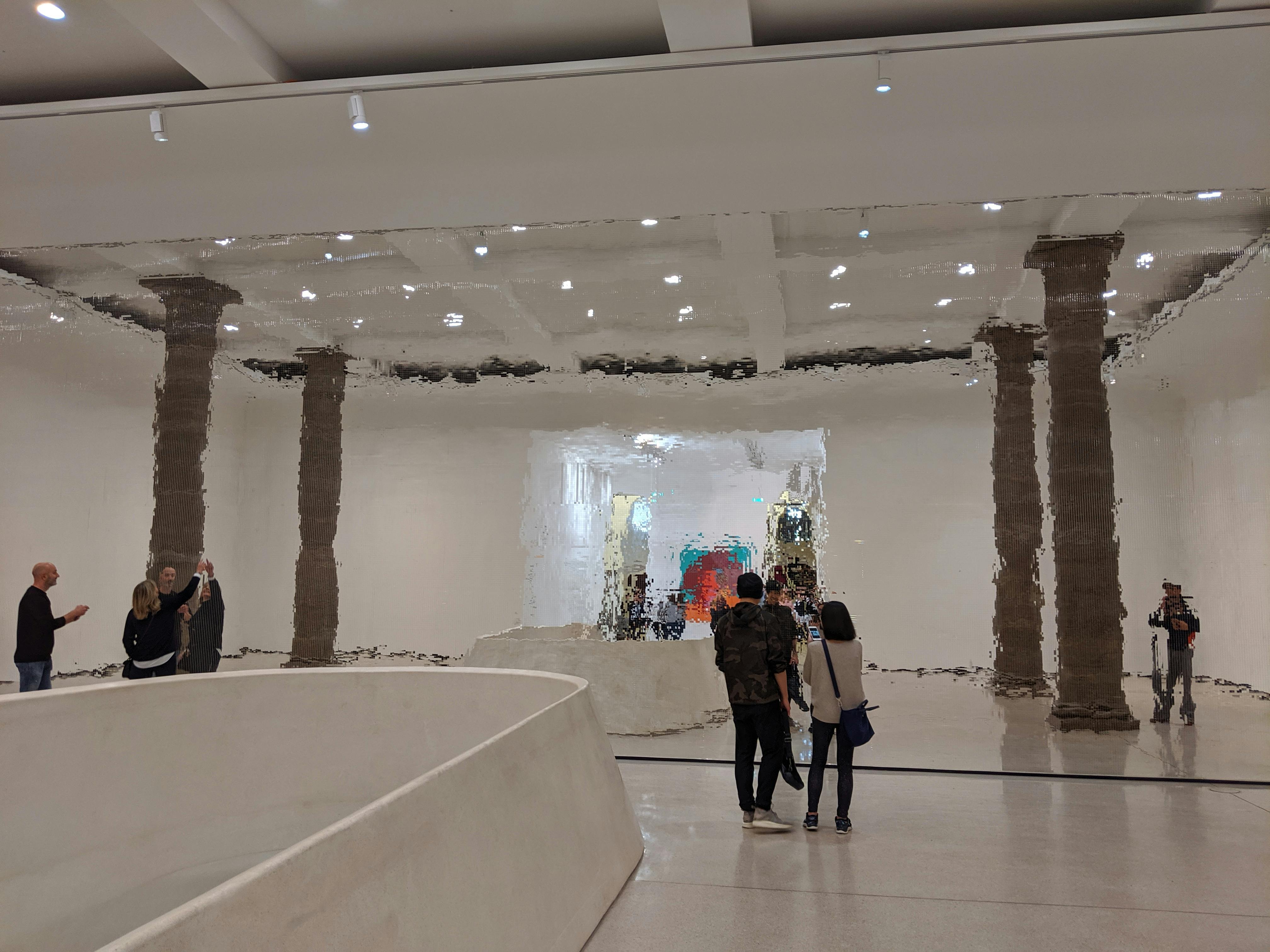
I walked through the newly restored Alexander Palace at Tsarskoye Selo last month. Every detail was exquisite—the silk wall coverings, the inlaid floors, the exact copy of Nicholas II’s study. A triumph of craftsmanship. But the audio guide spoke only of imperial glory and tragic fate, skating past the revolutions, the wars, the decades of neglect that made this restoration necessary. A visitor hoping to grasp the full weight of the place would leave with a story that was beautiful, partial, and strangely hollow.
Audiences in Waiting
The public, for its part, hasn’t abandoned these institutions. Ticket sales at major museums and theatres stay steady, even strong during holiday seasons. But the nature of attendance has changed. There’s less curiosity, more obligation—a sense of performing cultural citizenship rather than seeking a real encounter. School groups march through galleries in obedient columns. Tourists snap photos of paintings they’ll never look at again. The hunger for meaning, so thick in the Soviet era when a poetry reading could fill a stadium, has been replaced by a quieter need: to be seen doing the right things, to check the required boxes.
Still, I refuse to end on a note of despair. Cultural institutions are stubborn organisms. They’ve survived war, revolution, ideological assault, economic collapse. What they face now is subtler—a slow erosion of purpose, a gradual dimming of the light that once drew people in. The question isn’t whether they’ll last, but what shape that lasting will take. Will they become mausoleums, beautiful and inert? Or will they find a way to reconnect with the restless, questioning energy that’s always been the real source of Russian cultural power?
Frequently Asked Questions
How has state funding for Russian cultural institutions changed in recent years?
State funding has increased in nominal terms but lost significant real value because of inflation and the rising costs of maintenance, utilities, and materials. Many regional institutions run on extremely tight budgets, often unable to fund new acquisitions or major programming. This has shifted their role from active curation to basic preservation, with directors focused on keeping buildings open rather than expanding cultural offerings.
Why are young artists leaving state institutions in Russia?
Many young artists and performers are pulling away from formal state institutions due to limited creative freedom, bureaucratic constraints, and the sense that visibility can attract unwanted official attention. They often form independent collectives, perform in unofficial spaces, or distribute their work online. Some leave the country entirely, while others stay but operate outside the traditional framework, creating a parallel cultural scene that is lively but fragile.
What is the state of cultural institutions outside Moscow and St. Petersburg?
Regional institutions face severe resource shortages, often sharing facilities with non-cultural entities or operating with minimal staff. Despite these challenges, there is a noticeable undercurrent of grassroots creativity—amateur theatre groups, local exhibitions, and community-driven projects that persist without formal support. These efforts are often more experimental and personally engaged than their metropolitan counterparts, though they receive little recognition or funding.
How are restoration projects affecting cultural life in Russia?
Restoration efforts have been extensive and technically impressive, particularly at historical palaces, churches, and estates. However, critics note that these projects often prioritize architectural preservation over cultural programming, resulting in beautifully restored spaces that lack dynamic, contemporary content. The story presented to visitors can be selectively focused on imperial or national glory, avoiding more tangled historical discussions, which leaves the restored sites feeling curated but incomplete.