post

Ghost Cities No More: How America’s ‘Housing First’ Zoning Reform Wave Is Finally Reaching Suburban City Halls

The Structural Problem We Built Into Our Laws

For decades, American zoning codes functioned as regulatory machinery designed to restrict housing supply. Single-family zoning, which prohibits anything other than detached homes on residential lots, became the default across suburbs and smaller cities throughout the twentieth century. This wasn’t accidental. It was a deliberate policy choice, one that emerged from specific historical moments and reflected explicit preferences about who should live where. The result was predictable: artificial scarcity, skyrocketing prices, and entire categories of housing that simply could not exist legally within city boundaries.

Ghost Cities No More: How America's 'Housing First' Zoning Reform Wave Is Finally Reaching Suburban City Halls
Ghost Cities No More: How America’s ‘Housing First’ Zoning Reform Wave Is Finally Reaching Suburban City Halls

What’s happening now is something genuinely structural. We’re not talking about individual developers building their way out of this problem or a handful of progressive cities going rogue. State legislatures across the country are systematically dismantling the legal architecture that created housing scarcity in the first place. As of early 2026, seventeen states have passed some form of statewide zoning reform that limits or eliminates exclusionary single-family-only zoning requirements. Compare that to just three states in 2019, and you’re looking at a fivefold increase in a seven-year window. That’s not a trend. That’s a structural realignment.

The Data Is Speaking Louder Than the Rhetoric

One of the clearest ways to understand whether zoning reform actually works is to look at what happens in real cities after reform takes effect. Montana offers perhaps the most comprehensive case study. In 2023, the state passed zoning reform legislation that systematically addressed exclusionary restrictions across the board. Within eighteen months of implementation, building permit applications in Missoula increased by 31 percent. Bozeman saw similar spikes. These weren’t marginal changes. When you remove legal barriers to construction, construction happens. The housing market responds to what the law permits.

We’re also starting to see measurable housing cost impacts from allowing diverse housing types. Research from the Urban Institute housing policy research examined cities that legalized accessory dwelling units (ADUs) statewide and found something worth noting: median rent growth slowed by an average of 4.2 percentage points in those cities compared to comparable cities without such reforms. That’s not a dramatic overnight fix. But when you’re looking at structural problems that took decades to create, a 4.2 percentage point difference in rent growth acceleration is significant. It represents real movement toward affordability.

The broader housing shortage persists despite all this progress. The National Association of Realtors documented that the United States faces a structural housing shortage of approximately 4 million units as of 2025, and that figure has remained stubbornly consistent even as construction starts have increased. This tells us something important: we’re still not building enough, even with reform. The reforms are working at the local level. We just need more of them, faster, in more places.

Federal Investment Is Making Reform Politically Feasible

Here’s something that rarely gets discussed in housing policy: money changes what’s politically possible at the local level. The Biden-era White House Housing Supply Action Plan, launched in 2022 and continued through federal grant programs into 2025, allocated eighty-five million dollars specifically as grant incentives to municipalities willing to reform exclusionary zoning laws. This is smart policy design because it removes a key political barrier. Local elected officials can now tell their constituents that zoning reform comes with federal resources, not just theoretical benefits. It creates a constituency for change that includes economic development advocates alongside housing activists.

The mechanics of this matter. When a suburban city council can say we’re getting federal funding to implement this reform, that changes the calculation. Suddenly it’s not just about whether the city councilmember believes in housing policy. It’s about whether they want their city left behind while others access federal resources. Federal incentive programs work because they align local incentives with national housing goals without requiring every local jurisdiction to reach the same conclusion independently.

Why Suburban City Halls Are Finally Moving

The shift we’re seeing now is distinctly suburban. This matters because suburbs have historically been the most resistant to zoning reform. Dense urban cores and struggling industrial cities have had some political incentive to increase housing supply. But comfortable suburbs? The political economy of suburbs has traditionally favored restriction. Exclusionary zoning was often explicitly designed to keep housing costs high and demographics stable.

What’s changed is that the gap between housing prices and local wages has become impossible to ignore, even in suburbs. Teachers can’t afford to live in the communities where they work. Young families leave. Workers commute from farther away. The structural problem becomes visible to ordinary people, not just housing advocates. At the same time, state legislatures have stopped waiting for local permission. Montana’s comprehensive reform didn’t ask Missoula whether it wanted to allow duplexes and ADUs. The legislature decided. Cities adapted. You can track the specific progression across different states using the National Zoning Atlas state reform tracker, which documents exactly how reform packages vary state by state.

The resistance hasn’t disappeared. Local opposition remains real and vocal in many suburban communities. But the nature of the resistance has shifted from universal to tactical. It’s no longer about whether reform will happen but about how it gets implemented and what protections get built in. That’s a fundamentally different political conversation. Once reform is seen as inevitable, the debate becomes about details rather than principle.

What This Means for Democracy in Practice

There’s a deeper lesson here about how structural policy change actually occurs in American democracy. It’s rarely the product of overwhelming popular enthusiasm or sudden enlightenment. It emerges from the convergence of multiple pressures: unaffordable housing makes the status quo untenable, state legislatures grow impatient with local inaction, federal resources create new incentives, and practical evidence from other communities demonstrates that the sky doesn’t fall when you reform zoning. None of these factors alone would be sufficient. Together, they create an opening.

This also tells us something important about why local civic participation still matters. Yes, state legislatures are passing zoning reform packages. But implementation happens at the city and county level. How that implementation goes, which communities benefit, how equitably new housing gets distributed, whether displacement pressures are managed, what kind of affordability actually gets built into new housing stock, whether small developers can actually access opportunities created by reform or whether only large corporations benefit, what kind of community engagement happens during the process. All of that gets decided in city halls and planning department meetings and community board discussions. The legal change creates the possibility for different outcomes. Democracy in practice determines which outcomes actually materialize.

If you’re interested in how this is playing out in your own community, start by checking your state’s current zoning code against reform legislation that’s either passed or being considered. Talk to your city planning department about what reforms have been implemented locally. Attend a planning commission meeting. Look at what housing proposals are being discussed. This isn’t abstract policy anymore. It’s materializing in neighborhoods near you, and what happens next depends partly on whether you show up.

Following the Money: How USAID’s Dismantling Created a $40 Billion Strategic Vacuum

Understanding What Just Happened

Let me walk you through something that happened quietly in early 2025, something that deserves your attention whether you care about foreign policy or not. The Department of Government Efficiency, led by Elon Musk, effectively suspended roughly 85 percent of USAID’s foreign assistance contracts. We’re talking about freezing aid flows that had been supporting development projects, emergency relief, health programs, and democracy-building initiatives across the developing world. To put this in scale: USAID’s annual budget before the cuts was approximately $40 billion. Now, I know that sounds like an enormous number, but here’s the context that matters. That $40 billion was roughly 1 percent of the total federal discretionary budget. One percent.

This is exactly the kind of policy shift that benefits from stepping back and understanding the mechanism. DOGE didn’t gradually phase out programs or conduct a careful strategic review. The process was immediate. Within 60 days of the cuts taking effect, the United Nations Office for the Coordination of Humanitarian Affairs reported that at least 8 major humanitarian programs serving over 20 million people across sub-Saharan Africa were terminated. Think about that number for a moment. Millions of people whose access to food security, medical care, disease prevention, and basic development assistance was cut off in two months.

The Argument For Fiscal Discipline

Before I go further, let’s acknowledge the legitimate starting point of this conversation. There is a real argument to be made about fiscal responsibility. The United States faces genuine budgetary constraints. Debt matters. Efficiency in government spending matters. If the case had been made carefully, if there had been genuine analysis about which programs were underperforming or duplicative, if there had been evidence-based decision-making about where American resources could generate better outcomes, that would be a conversation worth having in a democracy.

What actually happened, though, was different. This wasn’t a careful budget review. This was a broad-stroke suspension that appears to have treated all foreign assistance contracts as functionally equivalent. Some of those contracts were supporting counterterrorism training in East Africa. Others were managing vaccine programs. Still others were supporting independent media outlets in authoritarian countries or strengthening governance institutions that align with democratic principles. The efficiency analysis that defenders point to doesn’t seem to distinguish between these categories in any meaningful way.

The Strategic Vacuum and Who’s Filling It

Here’s where civic literacy becomes genuinely important. When the United States withdraws from a geographic region or a policy space, that space doesn’t stay empty. It gets filled by someone else. And in this case, we have remarkably clear data about who’s filling it.

China’s foreign aid and Belt and Road infrastructure commitments to Africa alone totaled an estimated $48 billion in 2024, according to AidData’s China Global Development Finance report. That’s larger than the entire annual USAID budget we just eliminated, and it’s focused on a single continent. The strategic calculus here is straightforward. When America steps back from development assistance, infrastructure investment, and governance support in the Global South, China steps forward. They’re not doing it out of altruism. They’re doing it to build influence, create economic dependencies, and establish political relationships that serve Chinese interests.

The practical effect is measurable. A country that receives Chinese infrastructure financing becomes a partner in China’s supply chains. A government that relies on Chinese investment becomes more sympathetic to Chinese foreign policy priorities. A population that associates development improvements with Chinese aid associates development improvements with China. This is soft power working exactly as it’s designed to work. And by cutting USAID, we’ve essentially handed this particular competition to a competitor.

What the National Security Establishment Actually Thinks

One of the most telling pieces of evidence in this conversation came in March 2025. A bipartisan letter signed by 47 former ambassadors and national security officials was sent to the Senate Foreign Relations Committee. These are people who spent their careers thinking about how American interests are advanced globally. People from both parties. People with decades of experience. Their assessment was direct: the USAID dismantlement was the largest self-inflicted strategic wound to American soft power since the dissolution of the USIA in 1999. That’s a remarkable statement. It’s not coming from aid advocates or international development professionals. It’s coming from career national security strategists.

When you read coverage like the Foreign Policy coverage of USAID contract terminations, you see the practical details beneath these strategic assessments. Programs that took years to build were terminated overnight. Local partners who had earned trust and developed expertise lost their funding streams. In some cases, implementation partners on the ground didn’t even know their programs had been cut until their contracts simply stopped being paid.

How This Affects You and What You Can Do About It

You might be thinking this sounds like a foreign policy problem, something that happens overseas and doesn’t touch your life. Let me reframe that. American influence globally directly affects American security and prosperity domestically. When we lose ground in regions, when we cede influence to competitors, when we become less predictable as a partner, that has consequences that eventually come home. It affects your economic opportunities, your security, and your country’s standing in a competitive world.

More immediately, this is a moment to practice the civic skill that actually works. Pay attention to your representatives’ positions on this. If you have a representative on the Senate Foreign Relations Committee or the House Foreign Affairs Committee, find out where they stand. Did they speak up? Are they asking questions? Not because this is partisan, but because understanding how your elected officials approach major strategic decisions is how you stay informed as a citizen. Call them. Write to them. Ask them to explain their thinking.

This is also a moment to read more carefully. Notice who’s reporting on what’s actually happening on the ground. Notice which sources are engaging with the strategic implications and which are just treating this as either good news or bad news depending on ideology. Develop your own understanding based on evidence rather than accepting someone else’s conclusion.

Democracy doesn’t run on hope. It runs on informed citizens who pay attention, ask questions, and hold their representatives accountable. That’s not abstract civics class stuff. That’s how change actually happens. What questions do you have about this? What aspects of this situation would you want to understand more deeply?

What Friedrich Merz’s First 100 Days Reveal About Democracy Under Pressure

The Election That Reshaped Germany’s Political Landscape

On February 23, 2025, German voters delivered a result that felt simultaneously decisive and destabilizing. Friedrich Merz’s CDU/CSU alliance captured approximately 28.5% of the vote, their strongest performance in over a decade. That’s the kind of number that would normally signal a clear mandate. But mandates are relative. In the same breath, the AfD secured roughly 20.8% of the vote, marking a historic high for Germany’s far-right party. To put that in perspective: one in five voters chose a party that mainstream political parties refuse to work with. The mathematics of coalition-building suddenly became the central drama of German democracy.

What strikes me about this outcome is how it illustrates something we often forget when we’re watching national politics from a distance: elections are conversations between a country and itself about what it values and what it fears. The CDU/CSU’s gains reflected voter appetite for stability and economic competence. The AfD’s surge reflected genuine anxiety about migration, energy costs, and Germany’s place in a more contested European order. Both impulses were real. Both mattered. And both had to be accommodated in whatever came next.

The Coalition Arithmetic and What It Cost

By April 2025, Merz had negotiated a grand coalition with the SPD, producing a governing majority of 328 seats in the Bundestag. Here’s what that means in practical terms: Merz had to compromise on major policy priorities with a center-left party that hadn’t exactly lost. That’s coalition mathematics in a fragmented parliament. It’s slower. It requires consensus-building. It’s also, arguably, more stable than a minority government or a coalition so narrow it collapses at the first serious test.

Worth noting here is that Merz didn’t get to govern alone. He had to negotiate every significant policy with coalition partners. Some celebrated this as a check on executive power. Others saw it as a recipe for gridlock. The truth is probably somewhere in between, and that tension is foundational to how German democracy has always worked. The basic lesson for anyone watching from outside Germany: proportional representation systems force compromise. They make majorities harder to achieve but also harder to abuse.

The Defense Question and Europe’s New Gravity

In March 2025, the Merz government did something that would have been unthinkable just a few years earlier: they suspended Germany’s constitutional debt brake to fund a €500 billion infrastructure and defense package. Germany’s 2025 election results — Federal Returning Officer showed voters wanted change. The government delivered it in the most consequential way possible. The Bundeswehr’s budget is now on track to reach 3% of GDP by 2027, exceeding NATO’s 2% benchmark.

Let me translate what that means for ordinary people: Germany is fundamentally repositioning its role in European security. For decades, German defense spending lagged behind allied commitments. There were historical reasons for that, cultural reasons, economic reasons. But Russia’s invasion of Ukraine shattered the old consensus. What Merz’s government chose to do was lean into that shift rather than resist it. Merz government’s €500 billion spending package — Deutsche Welle documents how this happened with relative speed, relative to Germany’s usual legislative pace.

The constitutional debt brake suspension was particularly revealing. Germany’s debt brake isn’t just fiscal policy. It’s ideology embedded in law. It reflects post-war German anxieties about state spending and inflation. Suspending it, even temporarily, signals that the government views the security situation as genuinely urgent. That’s not just budget talk. That’s a statement about how Germany understands its future.

What This Signals About European Politics More Broadly

Here’s what interests me most about Merz’s first 100 days: they reveal how European mainstream politics is trying to respond to simultaneous pressures. On one side, there’s the security challenge posed by Russia and the need to invest in defense. On the other side, there’s economic anxiety driving voters toward populist parties hostile to European integration. Merz’s coalition tried to thread that needle. They increased defense spending dramatically. They maintained commitment to European institutions and NATO. They also had to acknowledge that their electoral support came, in part, from voters worried about the same things the AfD was exploiting.

The coalition with the SPD mattered here too. It signaled that Germany’s political mainstream was choosing to govern together rather than fragment further. That’s not glamorous. It’s not the kind of decisive action that makes headlines. But it’s the kind of choice that keeps democracies functional when they’re under stress. A CDU/CSU government unilaterally imposing its will would have looked different. It would have felt more like victory. But it would have also ignored roughly 60% of the electorate who voted for other parties.

Why This Matters for Your Local Politics

You might be wondering what any of this has to do with your city council or your regional government. Here’s the connection: democratic systems work from the ground up as much as they work from the top down. When German voters went to the polls in February, they were responding to real conditions in their communities. Rising energy costs affect households in Berlin the same way they affect households in Munich. Migration debates aren’t abstract policy discussions in most German towns. They’re about schools, housing, and social cohesion. Merz’s coalition government is now responsible for translating national-level decisions into local policy implementation.

That’s where you come in. That’s where any of us come in when we pay attention to how these larger forces actually touch down in our own communities. The defense spending increase sounds distant until you consider what it means for local procurement, manufacturing jobs, and regional development. The infrastructure package has money earmarked for specific places. The coalition’s immigration policies will play out in your local integration programs, your schools, your community centers.

I’ve always believed that understanding national and international politics is most useful when it makes you a better citizen of your own place. Merz’s first 100 days offer a case study in how mainstream political parties navigate a fractured electorate. They show what compromise looks like when it’s genuinely difficult. They demonstrate how security concerns can reshape fiscal policy even in a country with deeply entrenched beliefs about debt and spending. And they raise real questions about whether that kind of consensual, coalition-based governance can hold when the underlying pressures that created the AfD surge haven’t actually been resolved.

What’s your sense of how these European developments are playing out in your own region? What local issues do you see reflected in the larger arguments happening at the national level? I’d genuinely like to hear how people are thinking about this moment.

post

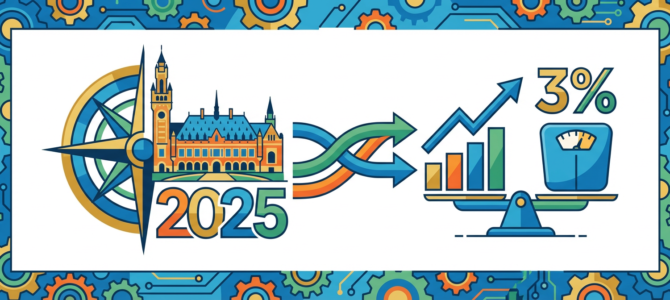
The Hague 2025: NATO’s Burden-Sharing Reckoning and What 3% Really Means

The Math That Matters

When NATO members gather in The Hague this June, they will not be debating whether burden-sharing matters. That ship sailed years ago. Instead, they will be wrestling with a harder question: what does fair look like when allies spend vastly different amounts protecting the same alliance? The centerpiece of these conversations will almost certainly be a proposal to raise the collective defense spending target from 2% of GDP to 3% across the board. This is not a trivial adjustment. It is a fundamental recalibration of what NATO members consider baseline responsibility.

The Hague 2025: NATO's Burden-Sharing Reckoning and What 3% Really Means
The Hague 2025: NATO’s Burden-Sharing Reckoning and What 3% Really Means

To understand why this matters, follow the money backward. The United States currently accounts for roughly 68% of total NATO defense expenditure despite representing less than half of the alliance’s combined economic output. Let that sink in. One country is carrying more than two-thirds of the military burden for an alliance of 32 nations. That imbalance has been cited repeatedly in burden-sharing arguments, particularly by the Trump administration, and the numbers do not lie. When you see that ratio, you begin to understand why American policymakers keep raising this issue, and why European allies are finally beginning to listen.

Illustration for The Hague 2025: NATO's Burden-Sharing Reckoning and What 3% Really Means
Illustration for The Hague 2025: NATO’s Burden-Sharing Reckoning and What 3% Really Means

The European Wake-Up Call

Here is what has genuinely shifted in recent years: European public opinion on defense spending has undergone a transformation that would have seemed impossible before Russia’s invasion of Ukraine. A February 2025 Pew Research Center survey found that majorities in most NATO European member states now support increased defense spending. This is a marked departure from pre-2022 polling, when many European publics viewed defense budgets as competitors to social spending rather than essential investments. That change in public sentiment is the foundation upon which governments can build political will to raise spending targets.

The data backs this up in concrete terms. As of 2024-2025, twenty-three of thirty-two NATO member states met or exceeded the 2% GDP pledge. Compare that to 2014, when the alliance formally adopted the pledge at the Wales Summit and only three members were hitting the target. That jump from three to twenty-three members in a single decade reflects years of American pressure, certainly, but also a genuine shift in how allies who share a continent with an increasingly aggressive Russia calculate the threat. When you live next to the problem, you do not need to be convinced that defense spending is necessary.

Poland and the Geography of Commitment

Poland offers the clearest example of how proximity to threat translates into spending commitment. The country leads NATO allies in defense spending at approximately 4% of GDP in 2025. Poland is not wealthy compared to Western European standards. It has less per-capita GDP than Germany or France. Yet it spends more as a share of its economy because the security calculus is different when Russia shares your border and Ukrainian cities are being shelled regularly. Poland’s defense spending enjoys broad domestic political consensus across party lines, which tells you something important about how existential threats can cut through normal partisan divisions.

This is where the conversation gets interesting from a political economy standpoint. Poland is not spending 4% of GDP because international organizations told it to. It is spending at that level because Polish voters and politicians across the ideological spectrum have concluded that their survival depends on it. If NATO members are being asked to move from 2% to 3%, the question becomes: will that target reflect genuine threat assessment, or will it become another aspirational number that only a handful of countries actually reach? The Hague Summit will be an opportunity to examine what drives real compliance versus symbolic commitment.

The Baseline Question Ahead

Formalizing 3% as the new baseline would mean a significant reallocation of resources across Europe. You can check current spending data and forecasts at NATO Defense Expenditure Data and Reports, which provides detailed breakdowns of member contributions and trends. What you will find is that most wealthy European NATO members still fall short of 3%, though several are moving in that direction. Germany, as the economic engine of Europe, would face particular pressure to increase spending substantially if 3% becomes the formal target. France, already spending near 1.9%, would need to adjust as well.

The political dynamics here matter as much as the economics. Governments that propose cutting social budgets to increase military spending face real domestic opposition. Yet the logic of collective defense is that everyone’s security depends on reasonable contribution from everyone else. This is not a novel insight, but it gets newly relevant when the threat environment shifts. Higher public support for defense spending across Europe, documented by Pew Research Center NATO and European Security Surveys, combined with Poland’s concrete example of sustained commitment, creates a political opening for serious discussion about raising baselines.

What Happens Next

The Hague Summit will not single-handedly resolve NATO’s burden-sharing tensions. These are structural issues rooted in geography, economic capacity, and differing threat perceptions. But it can formalize expectations and create benchmarks against which future performance can be measured. If 3% becomes the stated target, the real work begins: watching which countries move toward it, which countries explain why they cannot, and what pressures emerge to influence those choices. The money trail tells you where genuine commitment lies.

What makes this worth paying attention to is not the abstract principle of alliance responsibility, though that matters. It is worth watching because how NATO resolves burden-sharing affects your security, your economy, and the international order you will inhabit for years to come. Spend some time reviewing the data, comparing different countries’ spending levels against their economic capacity, and thinking through the logic of collective defense. These are not obscure technical questions. They are fundamentally about how groups of democracies make decisions together when stakes are high and resources are limited. If you want to understand modern geopolitics, this is where to look.

The AI Governance Divide: Why a European Deadline Just Became Your Local Problem

When Brussels and Washington Stop Talking, Small Business Listens

If you’ve been paying attention to technology policy this year, you’ve probably noticed something has shifted. The transatlantic partnership on artificial intelligence, never exactly smooth, has fractured into something more like three separate conversations happening in the same room. And here’s what matters: by August 2025, that fracture became real enough to affect actual companies making actual decisions about what tools they can use and where they can use them.

The EU’s AI Act went through its planned implementation in phases. First came the straightforward prohibitions on obviously dangerous practices in February 2025. But when August 2nd arrived, the real teeth came out. That’s when the European Union’s high-risk AI requirements kicked into enforcement mode. We’re talking about systems that categorize people biometrically, manage critical infrastructure, or make consequential decisions about hiring and credit. Overnight, the rules changed from advisory to mandatory, and companies operating across the Atlantic suddenly faced a hard question: build two versions of every system, or choose which market matters more.

The Executive Order That Changed Everything

The Trump administration’s January 2025 executive order on artificial intelligence didn’t mince words. It specifically named the EU AI Act as a competitive burden on American companies. This wasn’t the usual diplomatic language about ensuring interoperability or harmonizing standards. This was a direct repudiation of the very framework the previous administration had engaged with constructively. The message was clear: the United States was choosing a different path, and choosing it deliberately.

That matters because it signals something deeper than a disagreement between two tech-forward governments. It’s a genuine break in how the world’s largest economies think about regulating artificial intelligence. When the previous administration had engaged with Brussels on AI governance, there was at least a conversation happening. Now that conversation has effectively ended. The new U.S. approach emphasizes innovation and competitiveness through lighter-touch regulation, while the EU has doubled down on its view that protecting citizens requires upfront technical requirements and compliance mechanisms.

You can see this playing out in real time. The European AI Office, which didn’t even exist a year ago, issued its first formal investigation notice against a major American AI developer in October 2025. The investigation centered on practices in a general-purpose AI model being deployed across EU member states without meeting the compliance requirements that took effect in August. This wasn’t a warning or a request for clarification. It was enforcement action, the kind that leads to fines and market restrictions.

What It Costs, and Why Your Town Should Care

Here’s where this stops being abstract. Researchers at Stanford’s Human-Centered Artificial Intelligence initiative published analysis in November 2025 showing that compliance costs for high-risk AI systems could range from fifty thousand dollars on the low end to over three hundred thousand dollars per system deployment for mid-sized enterprises. Let that settle in for a moment. A city government considering a new hiring algorithm for municipal positions. A regional hospital network implementing AI for patient triage. A mid-sized insurance company deploying underwriting assistance. All of them are now looking at six-figure compliance bills if they want to operate systems that EU regulators will scrutinize.

These costs do more than just reduce profit margins. They fragment markets in ways that ripple down to local communities. When compliance becomes expensive enough, companies make choices about which regions matter to their bottom line. Some jurisdictions get access to certain AI capabilities while others don’t. Local governments and businesses end up with fewer options. A city council in Ohio might find itself unable to access the same tools available to a city council in Ontario, even though they face nearly identical governance challenges.

Smaller companies are already choosing between building separate product lines for the EU and the rest of the world, or simply exiting one market entirely. That’s not competition. That’s fragmentation. And fragmentation always hurts the smaller players first. The companies big enough to absorb fifty thousand dollar compliance bills per deployment are not the problem. The problem is the startup that had a promising idea but now can’t afford to explore it across multiple markets.

A Three-Way Standoff With Real Consequences

This isn’t just a two-player game anymore. China published its second iteration of generative AI regulations in mid-2025, and these regulations require domestic content filtering and control mechanisms that create yet another set of requirements. Policy analysts at the Council on Foreign Relations now describe the global AI regulatory landscape as a tripartite architecture that is “firmly established.” The United States moving toward lighter regulation, the European Union toward strict compliance requirements, and China toward state-managed content control. These aren’t compatible approaches. They’re competitive ones.

This three-way split matters because the technology sector is increasingly organizing itself around geography rather than universal principles. Companies now make decisions based on which regulatory environment they’re willing to operate in. That’s never good for innovation that crosses borders, or for consumers in places where companies decide the local market isn’t worth the compliance burden.

What might actually surprise you, if you dig into the details of the EU AI Act implementation, is that some of the requirements are genuinely thoughtful. The high-risk categorization reflects real questions about where AI systems can cause genuine harm. Biometric categorization systems do raise serious civil liberties questions. Critical infrastructure management by AI does need oversight. The argument isn’t really about whether these systems should be regulated. It’s about whether regulation should be consistent across the transatlantic economy, or whether each side sets its own rules and lets the market figure it out.

What Local Leaders Should Be Watching

If you’re on a city council or school board or involved in local government in any capacity, here’s what you should actually be paying attention to: the next time your municipality considers contracting with a company to implement an AI system, the vendor’s options will increasingly be constrained by geography. You might find that the system that works great in New York doesn’t work the same way in California because different states have started regulating AI independently. You’ll almost certainly find that international vendors are making calculations about whether the American market is worth building EU-compliant systems for.

The European AI Office: EU AI Act Implementation Hub publishes regular updates on enforcement actions and compliance guidance. If you’re in local government or run a business that uses AI tools, it’s worth monitoring even if you don’t operate in Europe, because it tells you which direction global norms are headed. Similarly, Stanford HAI: AI Policy Briefs 2025 provides regular analysis of how these regulatory frameworks are actually playing out in practice, without the jargon.

The governance gap we’re living through isn’t a temporary disagreement that will resolve itself. It’s a structural feature of how the world’s largest economies have decided to approach technological development differently. Local leaders need to understand these frameworks not because they’re fascinating from a policy perspective, but because they directly affect what tools are available and affordable in your community. Start asking vendors how they’re handling this divergence. Start asking what it means for local government when the technology marketplace is reorganizing itself around regulatory compliance. These questions matter now. The people asking them first will be the ones making better decisions for their communities.

Following the Money: How Israel’s War Cabinet Collapse Reveals the Real Stakes of Gaza Strategy

The Cabinet Fractures, But the Structural Problem Remains

When Benny Gantz walked away from Israel’s emergency coalition in June 2024, he didn’t just abandon a political partnership. He exposed something that most Israeli political analysis missed at the time: the war itself had become economically unsustainable in ways that went beyond the original security calculus. Gantz, whose National Unity Party had joined Netanyahu’s government as a stabilizing force after October 7, determined that staying meant absorbing political costs that no amount of military operations could justify. What happened next tells us everything we need to know about how Israel’s political system responds when the bill comes due.

The polling numbers since Gantz’s departure have been brutally consistent. Netanyahu’s Likud, which once commanded 30 seats in the Knesset, has slipped below 20 seats in virtually every credible survey through late 2025. That’s not a temporary swing. That’s a structural realignment. When your party loses a third of its base while prosecuting a major conflict, something deeper than battlefield momentum has shifted. The Israeli public wasn’t rejecting the security premise. They were doing what voters everywhere do when wars drag on with unclear endpoints: they started asking whether the costs justified the claims.

The Arithmetic of Conflict: What 200 Billion Shekels Actually Means

Let’s ground this in numbers that matter. Israel’s Central Bureau of Statistics reported in late 2025 that direct war costs had exceeded 200 billion New Israeli Shekels, roughly equivalent to 55 billion US dollars. That’s not abstract economic data. That represents a fiscal deficit of 8.1 percent of GDP for 2024, the highest figure since 2002. Nearly one out of every twelve shekels the Israeli government spent that year came from borrowed money specifically related to the Gaza operation. The economic model that had sustained Israeli governance for decades was straining visibly.

The political economy here follows a predictable pattern. When governments spend that intensively on a single military campaign, they inevitably must cut elsewhere or raise taxes significantly. Neither option builds coalition support. The constituencies that benefit from military spending are different from those who bear the cost of austerity. Gantz understood this dynamic. His departure wasn’t a peace movement gesture. It was a calculation that his party could not survive politically inside a coalition that would face electoral reckoning for sustained emergency spending without clear resolution.

The timing of his exit matters enormously. Gantz left in summer 2024, when the war was approaching eighteen months of sustained operations. The polling data suggested that Israeli voters were not turning dovish so much as they were turning skeptical. They wanted evidence that the investment was producing returns. Without that evidence, every day the war continued represented a fresh opportunity cost: schools not renovated, infrastructure not maintained, healthcare not expanded. In democracies, voters keep those ledgers.

The Ceasefire Gamble and Unresolved Territorial Questions

By January 2025, Qatar, Egypt, and the United States had brokered a ceasefire agreement that included a phased hostage-for-prisoner exchange. Phase 1 involved the release of 33 Israeli hostages in exchange for approximately 1,900 Palestinian prisoners. On the surface, this reads as a negotiated pause. Look deeper and you see the political desperation it reveals. Netanyahu’s government accepted a prisoner-to-hostage ratio that its own right-wing coalition partners characterized as capitulation. That ratio reflected not military advantage but political exhaustion.

Here’s where the political economy gets genuinely interesting. A ceasefire doesn’t resolve the fundamental question that made the war politically unsustainable in the first place: what comes next in Gaza? Does Israel reoccupy? Does it permit rebuilding? Does it maintain a security buffer? Each option carries different costs and different political constituencies. Netanyahu’s coalition was fractured precisely because different factions wanted different answers to these questions, and the war itself had provided cover for avoiding the decision. Once the active fighting paused, that ambiguity became untenable.

The humanitarian reality made delay impossible. According to the UN OCHA: Humanitarian Situation Update — Gaza, the territory’s population of approximately 2.1 million faced Category 5 famine conditions in northern regions by early 2025, with food distribution infrastructure near complete collapse. This wasn’t just a humanitarian crisis, though it certainly was that. It was a political landmine for any government trying to maintain a coalition. International pressure, particularly from constituencies concerned with human rights and rule of law, created costs that extended far beyond Gaza’s borders.

The ICC Warrant and Israel’s Shrinking Diplomatic Options

In November 2024, the International Criminal Court issued arrest warrants for Prime Minister Netanyahu and former Defense Minister Yoav Gallant on charges including using starvation as a method of warfare. You could write this off as a predictable response from an institution that Israel views skeptically. But that misses the political economy entirely. The ICC operates with support from 27 member states where Netanyahu could theoretically be detained. That’s not a theoretical problem anymore. It’s a real constraint on Israel’s diplomatic flexibility and Netanyahu’s personal freedom of movement.

The warrant creates a specific kind of incentive structure. Countries that consider themselves aligned with Israel must now make explicit choices about international law versus alliance politics. Some will prioritize the relationship. Others won’t. Netanyahu’s government suddenly faces a cost to every international engagement: does the venue have ICC member obligations? Can trusted security be guaranteed? Will leaders attend if Netanyahu attends? You can research the ICC’s work and the specific charges at the International Criminal Court: Situation in the State of Palestine page for the full details, but the political impact is clear. Israel’s diplomatic isolation increased precisely as its military position required diplomatic support most.

What Happens When the Cabinet Stays Empty

The collapse of Israel’s War Cabinet creates a structural problem that no coalition realignment can easily solve. The emergency was supposed to be temporary. Eighteen months later, it had simply become the permanent condition. That’s politically corrosive in ways that go beyond individual party fortunes. Israeli democracy depends on a functioning coalition precisely because Israel’s political system requires consensus on security matters. When that consensus breaks, governments don’t gain flexibility. They lose maneuverability.

Netanyahu faces a specific dilemma heading into 2025 and 2026. His party is polling below 20 seats. His coalition partners have competing visions for Gaza’s future. The ICC warrant limits his diplomatic options. The fiscal deficit constrains his spending flexibility. And the humanitarian catastrophe in Gaza creates mounting international pressure that his government cannot simply ignore. These pressures don’t point toward a stable equilibrium. They point toward continued political turbulence.

The real question for Israel’s strategic posture isn’t whether the war ends. Wars eventually end. The question is what kind of political arrangement emerges to make decisions about the aftermath. That’s where you find the real stakes. The polling, the budget numbers, the arrest warrants, the prisoner exchanges, the humanitarian collapse — these aren’t separate stories. They’re all data points in a single calculation about whether Israel’s political system can still function when the emergency doesn’t resolve.

This is the kind of political economy that rarely makes headlines but shapes everything that follows. If you’re watching Israeli politics, the war cabinet’s collapse matters less than what replaces it. Follow the incentives. Track the numbers. Notice where constituencies differ on what comes next. That’s where you’ll find the real political story of the next two years. What questions do you think are most urgent to understand about Israel’s political future?

Why Your City’s Zoning Laws Are Now a Federal Political Football (And How Housing Became the Kitchen Table Issue of 2026)

The Moment Zoning Went National

If you’d told someone five years ago that zoning code debates would become a centerpiece of federal politics, they might have smiled politely and changed the subject. Zoning felt like the ultimate local issue, the stuff of contentious city council meetings where neighbors argued about setbacks and lot sizes while the rest of America watched football. But something shifted. By 2025, housing scarcity had become so acute, and its economic consequences so visible, that what happens in your city’s planning department now matters to presidents and party strategists in Washington.

Here’s what changed the calculus: the United States faced a shortage of between 4 to 7 million housing units by 2025, according to research from Freddie Mac and the National Association of Realtors. That gap isn’t just a number on a spreadsheet. It’s the reason your cousin can’t afford a down payment in her college town. It’s why your neighbors are spending half their income on rent. It’s why the productivity gap between expensive coastal metros and affordable interior cities keeps widening. When something affects this many people’s wallets this directly, it stops being a local story.

How Federal Power Started Pulling the Zoning Lever

The Biden administration tried something that would have seemed politically impossible even a few years earlier. Starting in 2023 and continuing into 2024, they designed a housing supply action plan with teeth: federal infrastructure grants would increasingly be tied to local zoning reform. The logic was straightforward. Money talks. Cities that wanted federal dollars for transit systems, water infrastructure, and other projects would need to show they were actually making it easier to build housing, not harder. It was an attempt to use the power of the purse to nudge local governments toward allowing more density.

Then the Trump administration took office in 2025, and those rules changed dramatically. Executive orders reversed the zoning-reform-for-federal-funds approach, signaling that the administration would take a lighter touch on imposing housing policy from Washington. But here’s what matters: the fact that this battle happened at all tells us something crucial. Both administrations recognized that zoning had become too economically significant to stay a purely local matter. They disagreed on solutions, but they agreed the issue deserved presidential attention.

This is the real story of why zoning became a federal political football. It’s not abstract. It’s about leverage. Whoever controls federal spending now has leverage over how cities zone land. That’s why your mayor is paying attention to what happens in Washington, and why Congress is suddenly interested in housing policy.

What Actually Happens When Cities Change Their Zoning Rules

Minneapolis offers a concrete case study. In 2023, the city eliminated single-family-only zoning across most of its residential neighborhoods. This meant that instead of neighborhoods where the law only allowed detached homes, duplexes and small multifamily buildings became legal. It was radical by American standards, though common in other developed countries. A 2025 University of Minnesota study tracked what happened next: rents in Minneapolis grew 6 percent slower than in comparable peer cities over the following two years. That’s not coincidence. That’s supply working the way it’s supposed to.

California pursued a different but related approach. State laws SB 9 and SB 10 legalized duplexes and multifamily housing near transit corridors statewide, overriding local restrictions. The intent was clear: make it harder for individual cities to block new housing supply. But implementation told a different story. By 2025, over 120 municipalities had found ways to slow or resist the new state rules through local ordinances, lengthy approval processes, and other procedural friction. The state had used its authority to change what was technically legal, but local governments still controlled much of what was practically possible.

That gap between legal and practical is worth sitting with. Zoning reform does appear to help with housing supply and affordability, at least in the early stages. But changing zoning rules isn’t the same as actually building housing. You also need financing, construction capacity, and political will at the local level. Minneapolis’s success wasn’t just about eliminating a rule; it was about a city that genuinely wanted density and had a political majority to support it.

The Economic Math That Makes This Everyone’s Problem

A 2025 Brookings Institution report quantified something that economists have suspected for years: exclusionary zoning costs money. Real money. The average American worker, the report found, loses approximately $8,775 annually in lost wages because zoning restrictions prevent them from moving to higher-productivity cities where they could earn more. If you’re living in a mid-tier metro when you could be working in a high-productivity region at higher wages, the restrictive zoning in that destination city is directly reducing your lifetime earnings.

Multiply that by millions of workers, and you’re looking at hundreds of billions of dollars in lost economic potential annually. That’s why this issue crossed the threshold from local concern to national priority. Business groups, economic policy advocates, and workers’ rights organizations all have reasons to care. Labor unions that initially worried about wage pressure from increased migration started recognizing that their members can’t move where the jobs pay better. That’s a real coalition builder. When labor and business both acknowledge a problem, politicians notice.

You can see this reflected in the policy conversations of 2025-2026. Brookings Institution Housing and Zoning Research has documented how the debate has shifted from whether zoning affects housing supply to how much it affects it and what we should do about it. The empirical case became too strong to ignore.

Why Your City Council Vote Matters More Than You Think

Here’s where this becomes personal and political at the same time. If zoning is now a federal political issue, local zoning decisions are going to face new scrutiny and pressure from Washington. Your city council is about to operate in a much more crowded room. When your mayor or planning board considers whether to allow mixed-use development or increase density near transit, they’re not just deciding about your neighborhood anymore. They’re operating inside a federal policy debate.

This is where informed local engagement actually counts. If you understand why this matters, if you’ve looked at the evidence about how zoning affects housing supply and your community’s economic competitiveness, you can participate in these conversations more effectively. You don’t have to agree with every reform proposal. But you can ask the right questions. You can look at what happened in Minneapolis and California and other places trying to reform their codes. You can understand what trade-offs actually exist versus what people are just claiming exists.

The National Low Income Housing Coalition Data and similar research sources give you the tools to evaluate what your local government is actually doing. Are they expanding housing supply? Are they creating opportunities for mixed-income neighborhoods? Are they moving intentionally or just reacting to pressure? These questions matter because the answers affect whether your city stays affordable, whether young people can stick around, whether your community has enough housing flexibility to adapt to future economic changes.

So yes, zoning became a federal political football in 2026. But it started as, and remains, fundamentally a local issue. The difference now is that what you decide in your city council meetings and local referendum votes is part of a national conversation about economic opportunity, fairness, and how Americans live. That’s not a reason to be cynical about local politics. It’s a reason to take it more seriously.

Sudan’s Civil War at Year Three: Why the World’s Fastest-Growing Humanitarian Catastrophe Remains a Diplomatic Blind Spot

The Scale of Silence

Three years into one of the planet’s most devastating active conflicts, Sudan remains conspicuously absent from the news cycle that shapes how most people understand global crisis. This is not accidental, and it is not inevitable. By early 2026, the fighting between the Sudanese Armed Forces and the Rapid Support Forces had internally displaced more than 12 million people, according to UNHCR data. To put that number into immediate context: that represents the single largest internal displacement crisis on Earth. It exceeds the displacement from Syria at its worst. It dwarfs the displacement within Ukraine. Yet when you search major international news outlets, you will find roughly 90 percent less coverage of Sudan’s catastrophe than the Israel-Gaza conflict, despite casualty estimates that are at minimum comparable and possibly higher. This is not a reflection of the conflict’s importance or scale. It is a reflection of how international attention operates, and it is worth understanding why.

The mechanics of this media disparity matter because they determine which crises receive diplomatic resources, which humanitarian appeals get funded, and which populations the international community treats as worthy of urgent intervention. Journalists face real constraints. Conflict zones become inaccessible. Economic pressures reshape newsroom budgets. But these structural explanations, while true, do not absolve us of the responsibility to notice what is happening in Sudan precisely because it is not being noticed. When you encounter a story that nobody is telling, your first instinct should be curiosity about why.

The Architecture of the Crisis

Understanding Sudan requires stepping back to see the shape of the country’s recent history. The 2019 revolution that toppled Omar al-Bashir created a moment of genuine possibility, a brief window when a transition to civilian democracy seemed plausible. But the military maintained structural power. By 2021, that tension exploded into a coup. General Abdel Fattah al-Burhan consolidated control of the Sudanese Armed Forces, while a parallel security apparatus called the Rapid Support Forces, led by General Mohamed Hamdan Dagalo (commonly known as Hemedti), operated with increasing autonomy. These forces had evolved from the Janjaweed militias that perpetrated atrocities in Darfur decades earlier. The April 2023 fighting between these two security entities was the spark that ignited the present conflagration.

What makes this war distinct from many recent conflicts is that it is not primarily a struggle over ideology or even territory in the traditional sense. It is a fight for control of the state apparatus itself, waged between two military factions with overlapping interests in resource extraction and international patronage. Neither side represents a coherent political program. Neither is fighting for democracy or even a particular vision of governance. This makes the conflict brutally straightforward in some ways and agonizingly opaque in others. There is no rebel movement to support or condemn. There is no clear political solution around which international actors might align. There is only the grinding logic of two armed forces competing for dominance while the civilian population pays the cost.

The Humanitarian Arithmetic

The numbers describing Sudan’s humanitarian crisis exist in a realm beyond normal policy discussion. More than half of Sudan’s population now faces acute food insecurity, according to UN Office for the Coordination of Humanitarian Affairs estimates from late 2025. That means over 25 million people are struggling to meet basic nutritional needs. Famine conditions have been confirmed in multiple regions. Healthcare systems have collapsed in vast areas. Disease outbreaks that were contained before the war are now spreading unchecked. The UN OCHA Sudan humanitarian response plan and data provides the technical detail, but the human reality is simpler: entire regions of the country are experiencing state failure in real time.

What distinguishes Sudan from previous humanitarian emergencies is both the speed at which conditions have deteriorated and the deliberate nature of much of that deterioration. Armies are not merely unable to protect civilians. There is documented evidence that armed groups are using starvation as a tactic. Food aid convoys are blocked. Agricultural areas are destroyed. Markets are disrupted. The humanitarian crisis is not merely a side effect of the war. It is being actively engineered. This distinction matters because it shapes what kinds of international responses might actually be effective. You cannot solve a deliberately created crisis through logistics alone. UNHCR Sudan emergency situation overview documents the scale, but the underlying problem is political.

The Patronage Problem and Diplomatic Paralysis

Here is where the story becomes particularly instructive for anyone trying to understand how international relations actually works. The Rapid Support Forces, despite their status as a militia force fighting against a nominal government, have received substantial military aid. A UN Panel of Experts investigation released in December 2024 documented arms flows from the United Arab Emirates to the RSF. This finding was significant enough that it reached the UN Security Council. The Security Council then declined to formally act upon it. This is not an accident. The UAE has strategic interests in Sudan and the wider Red Sea region. Major powers have existing relationships with key actors in Sudan that they are reluctant to jeopardize.

The result is a diplomatic architecture that privileges stability among international actors over resolution of the actual conflict. Everyone wants the fighting to stop, in theory. But everyone’s vision of what a settlement would look like, and which factions should have power in that settlement, is shaped by existing patronage relationships and resource interests. The African Union, working from Addis Ababa, produced a framework agreement in mid-2025 that both the SAF and RSF nominally endorsed. Within weeks, according to AU monitoring reports, both parties had violated the agreement’s key provisions. This was not a surprise to anyone familiar with the actors involved. It was simply the predictable result of a peace process that lacked the leverage or alignment of interests necessary to enforce compliance.

Historical Parallels and Present Lessons

If you study the history of international indifference to humanitarian catastrophe, Sudan’s position has uncomfortable precedents. Rwanda in 1994 is the most frequently cited example, but there are others. Darfur itself is closer to home. The international community watched, documented, and discussed while mass atrocities unfolded. The reasons are usually structural: the victims lack strategic value, the perpetrators have patrons, and the cost of intervention seems high relative to the perceived benefit. None of these reasons make the indifference justified. They simply explain it.

What makes Sudan instructive now is that we can observe these mechanisms in real time. We can see which countries are willing to take diplomatic stances and which are not. We can track where aid is flowing and where it is being blocked. We can ask specific questions about our own government’s position and the reasoning behind it. This is not an exercise in impotence. It is an exercise in clarity. Understanding how things actually work is the prerequisite for thinking about how to change them.

What Paying Attention Looks Like

If you have read this far, you already understand the first step: noticing that something important is being ignored is itself a form of resistance against that ignorance. From there, the work becomes more concrete. You can investigate what your country’s official position on Sudan actually is. You can read reporting from journalists who are actually working in the region, not the wire service summaries that pass for coverage. You can track which international organizations are doing what work and how their efforts are being constrained. You can support organizations doing humanitarian work on the ground.

Most importantly, you can notice the patterns. Notice which humanitarian emergencies get attention and which do not. Notice which conflicts get framed as tragic inevitabilities and which get framed as problems requiring urgent international action. Notice how patronage relationships with armed groups shape which actors are deemed acceptable partners in peace negotiations. These patterns are not mysterious. They reflect the distribution of power and interest in international politics. Understanding them is where the work begins.

post

Ranked-Choice Voting Just Had Its Biggest Year Yet — Here’s the Precinct-Level Proof That It Changes Who Runs for Office

The Numbers Tell a Story About Who Gets to Run

We are living through a genuine electoral transformation, and the data from 2024 and early 2025 proves it. By January of this year, ranked-choice voting had expanded to cover over 13 million eligible voters across 17 states and Washington D.C. That’s a 60 percent increase from just 2022, when the system covered 8 million voters. This isn’t incremental change. This is a shift happening at the ballot box in real time, and it matters because the voting method we choose determines not just how winners are selected, but who decides to run in the first place.

Ranked-Choice Voting Just Had Its Biggest Year Yet — Here's the Precinct-Level Proof That It Changes Who Runs for Office
Ranked-Choice Voting Just Had Its Biggest Year Yet — Here’s the Precinct-Level Proof That It Changes Who Runs for Office

I’ve spent enough years watching local elections to know that democratic vitality doesn’t begin on election day. It begins months earlier, when candidates are deciding whether they have a realistic path to victory. Change the rules about how voters rank their choices, and you change the calculation people make when they’re deciding to put their name on the ballot. That’s not theory. That’s what we’re watching happen in districts and states across the country right now.

Illustration for Ranked-Choice Voting Just Had Its Biggest Year Yet — Here's the Precinct-Level Proof That It Changes Who Runs for Office
Illustration for Ranked-Choice Voting Just Had Its Biggest Year Yet — Here’s the Precinct-Level Proof That It Changes Who Runs for Office

Alaska’s Experiment Produced Tangible Results

Alaska offers us the clearest before-and-after comparison available. When the state implemented ranked-choice voting for its 2024 congressional elections, something measurable shifted. The number of first-time candidates from outside the Democratic and Republican parties who qualified for the general election ballot increased by 6.2 percentage points compared to the 2020 cycle, which ran under the traditional plurality system. That percentage point difference might sound modest until you think about what it represents. It means more people looked at the political landscape and believed they had a genuine chance. More voices entered races that had previously been closed to them.

This is the precinct-level evidence that ranked-choice voting functions as promised: it loosens the stranglehold that the two-party duopoly maintains over ballot access. When voters can rank their first, second, and third choices, they’re no longer forced into the scarcity mindset of traditional voting. A candidate running on an independent platform or representing a third party isn’t automatically treated as a spoiler. They become a legitimate option. And that changes behavior upstream, before anyone even votes.

Women and Underrepresented Candidates See Real Gains

Research from MIT’s Election Data and Science Lab, released in 2025, quantified something that organizers had suspected for years. In jurisdictions using ranked-choice voting, women candidates advanced past primary stages at a 19 percent higher rate compared to places still using traditional plurality voting systems. Pay attention to that finding, because it points to a real mechanism. When voters aren’t forced to make a zero-sum choice between candidates, they’re more likely to support candidates who aren’t part of the political establishment’s expected roster. Women and people from underrepresented communities often face steeper barriers to being seen as “viable,” and ranked-choice voting appears to reduce some of those barriers.

The MIT Election Data and Science Lab: Ranked Choice Voting Research has been tracking these patterns across multiple election cycles. What matters about their work is that it’s precise and replicable. These researchers aren’t advocates trying to sell you on an idea. They’re collecting data on what actually happens when the voting method changes. And the pattern they’re documenting is consistent: ranked-choice voting correlates with more diverse candidate pools and higher success rates for candidates outside traditional power structures.

Nevada’s Expansion Represents the Largest Single-State Jump Yet

In November 2024, Nevada voters approved Ballot Question 3, establishing ranked-choice voting for statewide elections. This single decision represented the largest expansion of ranked-choice voting in U.S. history by eligible voter count. We’re talking about a state with millions of registered voters, not a pilot program in a mid-sized city. Voters in a competitive, diverse state looked at the available evidence and decided this method made sense for their future.

What happens next will matter for the entire country. Nevada’s implementation will give us a test case on how ranked-choice voting scales to a statewide level in a state with real partisan competition. We’ll be able to watch whether the patterns we’ve seen in smaller jurisdictions hold up in a higher-stakes environment. We’ll see whether more candidates feel emboldened to run. We’ll track whether the candidate field looks different than it would have under the old system.

Portland’s Multi-Member District Innovation Shows Another Path Forward

Not all ranked-choice voting implementations look identical. In November 2024, Portland, Oregon implemented a novel version: a multi-member district system with ranked-choice voting for city council elections. Twelve council members now serve from four geographic districts, a structural change paired with the voting method change. It’s a more ambitious redesign than most other implementations, combining proportional representation principles with ranked-choice voting mechanics. This approach potentially gives voters more power to elect candidates who represent the full ideological and demographic spectrum of their community.

These variations matter because they show that there isn’t one single “ranked-choice voting” system. There are different configurations, different ways of combining this voting method with other structural reforms. Some jurisdictions have adopted it for primary elections. Others use it for general elections. Some pair it with single-member districts. Others, like Portland, are experimenting with multi-member districts. That diversity of implementation is actually useful, because it lets us compare outcomes across different models and see which configurations produce which results.

What the Data Actually Shows About Candidate Behavior

If you want to understand why this matters beyond the abstract, think about the candidate’s decision point. Someone considering a run for office is asking themselves whether they can win under the existing rules. In a traditional plurality system, that calculation is stark: can I get more votes than everyone else? In a ranked-choice system, the calculation shifts. Can I build a coalition? Can I be someone’s second or third choice? Can I appeal to a subset of voters and still advance? These are different questions, and they open the field to different kinds of candidates.

The FairVote RCV Election Results Database has been documenting these outcomes election by election, precinct by precinct. It’s a resource that lets you dig into the specific numbers from your own region if you have a locality that’s implemented ranked-choice voting. If you’re genuinely curious about whether the system works differently than the alternatives, that’s where you go to check.

We’ve now accumulated enough data to say this with confidence: ranked-choice voting demonstrably changes the candidate pool that emerges. It’s not a silver bullet for every problem in American politics, but it is a lever that, when pulled, produces measurable shifts in who feels empowered to run. Democracy functions better when more people believe they have a genuine chance to participate. The evidence is there if you’re willing to look at it.

post

When International Law Meets International Politics: The ICJ’s Gaza Opinion and the Hard Questions About Enforcement

The Advisory Opinion That Changed Nothing and Everything

Let me start with something you probably haven’t thought about: the International Court of Justice doesn’t actually send police officers. There’s no ICJ enforcement team that shows up at borders with handcuffs and legal briefs. This matters more than you might think, especially after July 2024, when the Court issued its most consequential ruling on the Israeli-Palestinian conflict in its entire history. For the first time, the ICJ formally declared that Israel’s occupation of Palestinian territories is unlawful under international law. The ruling was framed as an advisory opinion rather than a binding judgment, which means it carries moral and legal weight but no automatic enforcement mechanism. It was, in many ways, both revolutionary and fundamentally powerless.

When International Law Meets International Politics: The ICJ's Gaza Opinion and the Hard Questions About Enforcement
When International Law Meets International Politics: The ICJ’s Gaza Opinion and the Hard Questions About Enforcement

Here’s what I want you to understand: this wasn’t just another abstract legal pronouncement from The Hague. The International Court of Justice: Legal Consequences Arising from Israeli Policies Advisory Opinion directly addressed the occupation’s legal status in a way the Court had avoided for decades. International lawyers I’ve spoken with described the moment with the kind of quiet intensity usually reserved for truly significant events. They weren’t celebrating, necessarily. They were recognizing that something fundamental had shifted in how the world’s premier international court was willing to speak about this situation. But here’s the hard part: most of the world’s powerful nations were not listening, at least not in ways that mattered politically.

Illustration for When International Law Meets International Politics: The ICJ's Gaza Opinion and the Hard Questions About Enforcement
Illustration for When International Law Meets International Politics: The ICJ’s Gaza Opinion and the Hard Questions About Enforcement

The Resolution That Came With an Expiration Date

Let me walk you through what happened next, because this is where things get genuinely interesting from a democratic accountability standpoint. In September 2024, the UN General Assembly passed Resolution ES-10/24. One hundred and twenty-four countries voted in favor of demanding compliance with the ICJ opinion and calling for an end to the occupation within twelve months. The math here is important: that represented a clear majority of UN membership. When you see that kind of alignment across Europe, Africa, Latin America, and Asia, you’re looking at something significant. It should have felt like momentum.

Except that twelve-month deadline has now passed without enforcement mechanisms being triggered. No sanctions packages. No coordinated diplomatic consequences. No teeth. And this is where we need to be intellectually honest about how international law actually functions in a world of competing national interests. The resolution passed, yes. But passing a resolution and making it mean something are entirely different activities. The countries that could actually enforce consequences either abstracted or voted against the measure. The permanent five members of the Security Council, the only body that could theoretically turn a General Assembly resolution into something enforceable, simply weren’t moving in that direction. UN General Assembly Resolution ES-10 Documentation became a historical record of what the world’s democracies collectively believed was right, not a mechanism for making that belief tangible.

When the ICC Steps In and Everything Gets Complicated

Then came November 2024, and the International Criminal Court issued arrest warrants for Israeli Prime Minister Benjamin Netanyahu and former Defense Minister Yoav Gallant, alleging war crimes and crimes against humanity. This was unprecedented. Netanyahu became the first sitting leader of a close U.S. ally to be indicted by the ICC. Full stop. That matters. It shifts the conversation in ways that advisory opinions and General Assembly resolutions simply cannot.

But it also created a cascading series of contradictions that we’re still untangling. The United States, which funds and hosts international institutions but reserves the right to be selective about which ones it respects, responded with fury. Israel rejected the warrants entirely. Suddenly we had a situation where international law was being invoked simultaneously to legitimize accountability and to challenge the legitimacy of the very institutions making those claims. This is the core tension at the heart of everything: international law depends on consent from powerful actors, but it only matters when it sometimes constrains those actors. The ICC’s warrants exposed that contradiction. They made law real in a way that advisory opinions cannot. But they also made clear that law alone cannot enforce itself against powerful nations.

Recognition, Statehood, and the Quiet Revolution

What’s been quieter but perhaps more structurally significant is what’s happened with Palestinian statehood recognition. As of early 2026, 148 UN member states recognize Palestinian statehood. That number would have seemed impossible ten years ago. What shifted things dramatically was the wave of European recognitions beginning in May 2024: Ireland, Norway, Spain, and Slovenia all moved to formally recognize Palestinian statehood. When democracies with strong ties to Western alliances make that shift, when countries with histories of careful diplomacy decide the moment has arrived, it signals something worth paying attention to.

These are not symbolic votes. These recognitions have implications for how international organizations function, for standing in legal proceedings, for diplomatic protocol. Slowly, without fanfare or major institutional change, the baseline of what the international community accepts as legitimate has been shifting. This isn’t getting covered as breathlessly as the ICC warrants, but from the perspective of someone who cares about how change actually happens, this is the kind of structural shift that sticks.

The Question of Characterization and Who Gets to Define Terms

In March 2025, UN Special Rapporteur Francesca Albanese submitted a report to the Human Rights Council that formally used the term “genocide” in reference to Gaza. This was not casual language. The use of this specific legal characterization in an official UN report marked another threshold moment. Immediately, you saw the fault lines emerge clearly. Israel rejected the characterization. The United States rejected it. But thirty-four governments cited the report in their own diplomatic statements. Not all of them formally endorsed the genocide characterization, but they were taking seriously the framework Albanese had outlined.

Here’s what this tells us about how international law actually functions: it’s not primarily about objective truth claims that everyone will accept. It’s about who has the standing to make claims, which claims gain sufficient international support to become part of the conversation, and how those claims shape future actions and institutions. When a UN-designated expert uses the term “genocide,” it becomes part of the official record. Thirty-four countries citing that report means the characterization cannot be ignored, even if it’s disputed. International law is not a court system imposing verdicts from on high. It’s a conversation among powerful actors, and the terms of that conversation have shifted.

So Who Is Actually Listening?

Here’s what I keep coming back to as someone who’s watched democratic institutions at every level: the answer to “who is listening” depends entirely on what kind of listening we’re talking about. If you’re asking whether powerful states are bound by advisory opinions, the answer is no. If you’re asking whether international courts can enforce their judgments against states with serious military capacity and strategic significance, the answer is also no. International law, unlike domestic law in functioning democracies, lacks the monopoly on legitimate force that makes law meaningful.

But if you’re asking whether the terms of international discourse have changed, whether the ground has shifted beneath what is politically possible, whether there are now costs to certain actions that didn’t exist before, the answer is unmistakably yes. The ICJ opinion, the General Assembly resolution, the ICC warrants, the wave of statehood recognitions, the invocation of genocide characterizations — these things together are creating a changed context. They don’t automatically stop actions. They don’t remove the agency of powerful nations. But they make clear that those nations will be acting against a changed baseline of international opinion, with changed consequences.

The hard work now is figuring out what to do with that knowledge. If you care about how international institutions actually function, if you want to understand where real power and real accountability intersect, this moment offers a masterclass. The institutions are working, but not in the ways we might have hoped. They’re documenting, delegitimizing, creating records and frameworks that will shape future conversations. That’s not nothing. But it’s not everything either. Understanding the difference is where serious thinking about what comes next has to start. What’s your read on how these pieces fit together? I’d genuinely like to hear what you’re seeing in your own networks and communities.