Why Your Neighborhood Coffee Shop Closing Isn’t Just Bad Luck

The System Behind the Symptoms

When Rosie’s Cafe shuttered after twenty-three years on Maple Street, neighbors blamed rising rents and corporate competition. But three blocks away, Maria Santos was connecting dots that others missed. The cafe’s closure wasn’t an isolated tragedy—it was the predictable outcome of zoning laws that favored chain stores, tax incentives that benefited large developers, and a city council that routinely approved projects without meaningful community input.

This is where effective community organizing begins: recognizing that individual problems are usually symptoms of larger structural issues. The most successful organizers I’ve worked with don’t just respond to crises. They map the systems creating those crises and build power to change them.

Power Mapping: Who Really Makes the Decisions?

Before Maria’s group held a single meeting, they spent three months researching who actually influenced development decisions in their neighborhood. They discovered that the Planning Commission’s five members included two real estate developers and a bank executive. More importantly, they learned that the commission’s meetings were scheduled at 2 PM on Tuesdays—a time designed to exclude working parents.

Power mapping reveals the formal and informal networks that shape policy. Start with the obvious decision-makers like elected officials, then trace the relationships outward. Who funds their campaigns? Which organizations do they belong to? Who shows up to their public events? In Maria’s case, they found that a single consulting firm had written environmental impact reports for the last six major developments—all of which sailed through approval.

This research phase isn’t glamorous, but it prevents organizers from wasting energy on symbolic targets who lack real influence. When you understand the actual power structure, you can design campaigns that apply pressure where it matters most.

Coalition Building Beyond the Usual Suspects

Maria’s initial instinct was to organize fellow longtime residents who shared her concerns about gentrification. But power mapping revealed a more complex situation. The family-owned hardware store was struggling with the same rent increases as Rosie’s Cafe. New parents at the elementary school wanted walkable neighborhoods just as much as longtime residents did. Even some property owners were frustrated with development policies that prioritized luxury housing over mixed-use projects that could support local businesses.

Effective coalition building requires identifying shared interests across apparent divides. This means moving beyond identity-based organizing to focus on how different groups experience the same structural problems. When the coalition eventually challenged the Planning Commission’s meeting schedule, they brought together working parents, small business owners, disability rights advocates, and seniors—each group explaining how the current system excluded their participation for different but related reasons.

The key is finding what organizers call “concrete material interests”—the specific ways that structural problems affect people’s daily lives. Abstract principles like “community input” become powerful when connected to concrete concerns like “I can’t attend meetings that determine my family’s future because they’re scheduled when I’m at work.”

Escalation Ladders: From Petition to Power

Too many organizing efforts jump straight from complaint to confrontation, skipping the strategic escalation that builds both power and legitimacy. Maria’s group started with research-based presentations to individual city council members, moved to packed public comment periods, then organized a well-documented hearing where Planning Commission members had to explain their scheduling decisions on the record.

Each escalation step worked on multiple levels: testing officials’ responsiveness, building the coalition’s confidence, and creating opportunities for more people to join the effort. When they finally organized a protest outside City Hall, it wasn’t an emotional outburst. It was the logical next step after exhausting conventional channels, with clear demands backed by months of relationship-building and research.

The most sophisticated campaigns plan their escalation ladder backwards from their ultimate goal. If you need five city council votes to change a policy, what would convince those specific council members to support your position? What combination of constituent pressure, media attention, and coalition breadth would move them? Then design a series of actions that systematically builds toward those conditions.

Making Victory Stick Beyond Single Issues

Six months after starting their campaign, Maria’s coalition won meaningful concessions: Planning Commission meetings moved to evening hours, new requirements for community input on major developments, and a small business preservation fund. But the most important victory was structural—they had built an organization capable of monitoring implementation and taking on new issues.

This is where many organizing efforts fail. Single-issue campaigns can win policy changes that get reversed quietly six months later. Sustainable change requires building ongoing organizational capacity to monitor implementation, hold officials accountable, and identify emerging issues before they become crises. Maria’s group established monthly monitoring meetings, trained new leaders to track city council agendas, and created rapid-response systems for when new threats emerged.

The goal isn’t just winning specific campaigns. It’s shifting the balance of power so that community voices become a permanent factor in decision-making. This means developing local leadership, creating transparent decision-making processes within your own organization, and building relationships with other organizing efforts facing similar structural challenges in different neighborhoods or issue areas.

When you walk past Rosie’s Cafe’s empty storefront now, what systems do you see operating? What power relationships shape the decisions that transformed your neighborhood? And what would it take to build the organized community power necessary to influence those decisions before the next Rosie’s closes?


post

How to Track Your Local Government’s Promises (And Why Your Tuesday Night Matters More Than You Think)

The Tuesday Night Democracy Show Most People Miss

Every second Tuesday at 7 PM, five people sit around a horseshoe-shaped table in a fluorescent-lit room at City Hall and make decisions that will determine whether your neighborhood gets new streetlights, your local park gets upgraded playground equipment, or that pothole on Maple Street finally gets fixed. These are your city council members, and most residents couldn’t pick them out of a lineup.

How to Track Your Local Government's Promises (And Why Your Tuesday Night Matters More Than You Think)
How to Track Your Local Government’s Promises (And Why Your Tuesday Night Matters More Than You Think)

These Tuesday night gatherings shape your daily life more than most federal legislation ever will. When Council Member Sarah Johnson promises during her campaign that she’ll push for better snow removal in Ward 3, that’s not just campaign rhetoric. That’s a commitment you can track, measure, and hold her accountable for when budget discussions roll around in March.

What I love about local government accountability is how visible it is. Unlike tracking congressional votes on complex federal legislation, monitoring your city council’s follow-through on campaign promises is surprisingly straightforward. The meetings are public, the budgets are accessible, and the results are literally visible on your streets.

Illustration for How to Track Your Local Government's Promises (And Why Your Tuesday Night Matters More Than You Think)
Illustration for How to Track Your Local Government’s Promises (And Why Your Tuesday Night Matters More Than You Think)

Building Your Personal Accountability Dashboard

Start with the promises. During the last election cycle, did your council candidates commit to specific initiatives? Maybe Candidate Martinez talked about expanding bike lanes, or Candidate Thompson promised to streamline the small business permit process. Write these down. Create a simple spreadsheet or use a note-taking app, but make it somewhere you’ll actually check back.

Next, learn the rhythm of your local government’s calendar. Most cities follow predictable patterns: budget discussions in late winter, infrastructure planning in spring, and community development reviews in fall. When you know this rhythm, you can anticipate when those campaign promises should start moving through the system. That bike lane expansion Martinez promised? It should appear in transportation committee meetings by April if she’s serious about making progress this year.

Set up your information pipeline. Most city websites offer email updates for council meetings, committee schedules, and public hearings. Sign up for these alerts. Follow your city’s official social media accounts. Many councils now live-stream their meetings or post recordings online. You don’t need to watch every three-hour session, but knowing when agenda items relate to your tracked promises helps you tune in for the relevant discussions.

Create accountability checkpoints throughout the year. After each quarterly budget review, after major committee meetings, and especially before the next election cycle, revisit your list. Which promises moved forward? Which ones stalled? Which ones disappeared entirely without explanation?

The Art of Productive Follow-Up

Good accountability isn’t about gotcha moments or angry confrontations at public comment periods. It’s about maintaining respectful, persistent engagement that encourages follow-through while acknowledging that local governance is genuinely complicated.

When a promised initiative stalls, reach out to the relevant council member’s office with specific questions. Instead of “Why haven’t you fixed the bike lanes yet?” try “Can you update me on the timeline for the bike lane expansion discussed in your campaign? Are there specific budget or planning hurdles the community should know about?” This approach invites collaboration rather than defensiveness.

Attend committee meetings where your tracked issues appear on agendas. These smaller gatherings often allow more substantive discussion than full council sessions. You’ll hear the real challenges: budget constraints, state regulatory requirements, coordination issues with county government, or legitimate community concerns that arose during implementation planning.

Document everything, but share constructively. If Council Member Johnson consistently votes against the snow removal improvements she campaigned on, that’s valuable information for your neighbors. But frame it factually: “Johnson voted against the snow removal budget increase three times this year” rather than “Johnson lied about snow removal.” Let fellow residents draw their own conclusions from documented patterns.

When Your Tracking Reveals Bigger Patterns

After a year of tracking campaign promises, you’ll start noticing broader patterns about how your local government operates. Some council members consistently follow through on infrastructure promises but struggle with social program commitments. Others excel at constituent services but rarely champion proactive policy changes. These patterns matter more than single-issue scorecards.

Pay attention to which types of promises routinely get delayed or abandoned. If multiple council members’ affordable housing initiatives consistently stall, that might indicate budget constraints or state-level regulatory barriers rather than individual failures of will. Understanding these patterns helps you become a more effective advocate for the changes you want to see.

Notice which campaign promises get implemented quickly and easily versus those that face sustained opposition. The easy wins often reflect areas where community consensus already exists or where implementation costs are minimal. The difficult promises reveal where real political courage and sustained advocacy are required.

Track not just individual promises, but how well the overall campaign conversation predicted actual governance priorities. Did candidates focus heavily on public safety during campaigns while spending most of their first year debating development regulations? These disconnects highlight gaps between campaign rhetoric and governing reality that voters deserve to understand.

Building Community Around Accountability

Individual tracking creates personal awareness, but shared accountability tracking builds community power. Consider organizing a monthly coffee meetup where neighbors compare notes on council member follow-through. Create a neighborhood newsletter that includes a regular “Promise Tracker” section. Use social media groups to share updates about local government actions related to campaign commitments.

Partner with local civic organizations, neighborhood associations, and advocacy groups who track issues from different angles. The housing advocacy group monitors affordable housing promises while the environmental group tracks sustainability commitments. Sharing information creates a more complete picture of local government accountability than any individual effort could achieve.

Remember that good accountability requires understanding context. Budget constraints, state mandates, and unforeseen circumstances legitimately affect implementation timelines. The goal isn’t to punish officials for every delayed initiative, but to maintain informed community engagement that encourages transparency about both successes and obstacles.

Your tracking efforts contribute to better civic education that benefits everyone in your community. When residents understand how local government actually works, when campaign promises get translated into budget items, and where implementation bottlenecks typically occur, democratic participation becomes more sophisticated and effective. Start with one or two promises that matter to you personally, and let your growing understanding of local governance guide your expanding involvement in the democracy happening every Tuesday night at City Hall.

post

The Tea Party Playbook: What Samuel Adams Can Teach Modern Community Organizers

When Committees of Correspondence Ruled the Colonies

Picture this: It’s 1772, and Samuel Adams sits in a Boston tavern, quill in hand, crafting what would become one of history’s most effective organizing tools. The British Parliament has just announced that colonial judges will now be paid directly by the Crown rather than colonial assemblies. Adams doesn’t just fume about it over ale. He creates the Committee of Correspondence, a network that will spread information, coordinate resistance, and ultimately help birth a revolution.

The Tea Party Playbook: What Samuel Adams Can Teach Modern Community Organizers

The genius of Adams’s system wasn’t in its complexity but in its simplicity. Each town would establish its own committee to document grievances, share information with other towns, and coordinate responses to British policies. Within months, over 260 towns across Massachusetts had formed committees. By 1774, twelve of the thirteen colonies had established inter-colonial committees. What started as local civic engagement became the communications backbone for independence.

Modern community organizers can learn a lot from this 18th-century social network. Adams knew that real change requires more than passionate speeches or even successful protests. It demands patient relationship-building, systematic information sharing, and the unglamorous work of connecting local concerns to bigger movements. The committees weren’t just talking shops. They researched issues, documented problems, and created actual plans for response.

Illustration for The Tea Party Playbook: What Samuel Adams Can Teach Modern Community Organizers

Building Networks That Actually Work

The Committee of Correspondence model worked because it solved a basic organizing problem: how do you keep momentum alive between crisis moments? Adams figured out that effective movements can’t just react to emergencies. They need structure that operates during quiet periods, building relationships and gathering information that becomes crucial when action is needed.

Today’s best community organizing efforts mirror this approach. Take the Industrial Areas Foundation network, which has been organizing communities since the 1940s. Their model focuses on “relational meetings” where organizers spend months just listening to community members, understanding their concerns, and mapping existing relationships before ever calling a public meeting. Like Adams’s committees, they put relationship building ahead of flashy demonstrations.

Look at how modern tenant organizing works the same way. Successful tenant unions don’t spring up overnight when rent increases get announced. They grow from building-by-building conversations, floor captains who actually know their neighbors, and regular meetings that happen whether there’s a crisis or not. The National Domestic Workers Alliance uses a similar approach, building state-by-state networks that share strategies, resources, and support even when local campaigns aren’t making headlines.

The digital age has changed the mechanics, but the principles stay the same. Online platforms can amplify the committee model, allowing for rapid information sharing and coordination across vast distances. But honestly? The most effective contemporary organizing still requires the face-to-face relationship building that Adams knew couldn’t be replaced. Virtual tools work best when they support local human connections, not replace them.

The Art of Incremental Victory

Adams and his fellow organizers got something that modern movements sometimes miss: big change usually comes from piling up smaller victories, not single revolutionary moments. The committees didn’t immediately call for independence. They started with specific, winnable campaigns around local grievances, slowly building the skills, relationships, and confidence needed for bigger challenges.

This step-by-step approach shows up throughout successful organizing history. The Civil Rights Movement’s success in Montgomery wasn’t just about Rosa Parks’s individual courage. It built on years of organizing by the Women’s Political Council, led by Jo Ann Robinson, which had already researched bus ridership patterns, identified economic pressure points, and built relationships with black taxi companies and church networks. When the moment came for action, the infrastructure was ready.

Today’s organizers can apply this lesson by celebrating small wins while keeping their eyes on bigger goals. A neighborhood group fighting for better street lighting might start with a single dangerous intersection, using that success to build credibility and relationships for larger infrastructure campaigns. Environmental justice groups often begin with local air quality monitoring, developing both technical know-how and community engagement that supports broader policy advocacy.

The trick is picking initial campaigns that are both winnable and actually matter to the community you’re organizing. Adams picked issues that directly affected colonists’ daily lives and wallets. Modern organizers succeed when they similarly connect immediate concerns to larger systemic issues, helping people see how their individual experiences connect to broader patterns of power and resource distribution.

Information as Organizing Infrastructure

The committees’ most radical aspect might have been their commitment to systematic information gathering and sharing. Adams insisted that committees document everything: unfair court decisions, economic impacts of British policies, instances of official misconduct. This wasn’t just record-keeping. It was intelligence gathering that revealed patterns and provided evidence for broader claims about British rule.

Modern organizing carries on this tradition through practices like power mapping, opposition research, and policy analysis. Successful campaigns combine emotional appeal with solid documentation. The Fight for $15 movement didn’t just argue that workers deserved higher wages. They compiled detailed studies of regional cost of living, corporate profit margins, and economic multiplier effects. This research foundation allowed local campaigns to respond quickly to opposition arguments and adapt strategies based on real data.

Community groups today can copy the committees’ information-sharing approach through regular reports that connect local observations to broader trends. A parent organization advocating for school funding might track budget decisions across multiple districts, spotting patterns and successful strategies that individual schools can adapt. Housing advocates might document landlord practices across neighborhoods, building cases for policy changes while supporting individual tenant challenges.

The goal isn’t just collecting information but creating systems for analysis and distribution that strengthen organizing capacity. Like Adams’s committees, effective modern groups develop members’ skills in research, writing, and public presentation, building internal capacity rather than depending only on professional staff or outside experts.

Democracy in Practice, Then and Now

Maybe the most useful aspect of the Committee of Correspondence model was its democratic structure. Adams didn’t create a top-down network controlled from Boston. Each local committee kept its independence while participating in broader coordination. Decisions came through debate and consensus-building rather than executive orders. This approach built real ownership among participants while maintaining enough unity for effective action.

Contemporary organizing faces similar tensions between local independence and coordinated strategy. The most successful modern movements find ways to balance these needs, creating space for local adaptation while maintaining shared principles and mutual support. The Movement for Black Lives demonstrates this approach, connecting local organizations through shared policy platforms while respecting the unique contexts and strategies of different communities.

The historical comparison has its limits, obviously. Colonial society was far more uniform than contemporary America, making consensus easier to reach. Modern organizing must navigate differences of race, class, language, and ideology that Adams never dealt with. Digital communication creates opportunities for broader participation but also new challenges around information quality and democratic decision-making at scale.

Yet the core insight remains powerful: lasting social change requires organizational forms that develop people’s capacity for democratic participation while achieving concrete victories. The committees succeeded not just because they opposed British rule but because they created new forms of collective problem-solving that previewed the democratic society they were trying to build. Modern organizers face the same challenge: creating the change we want to see while building the relationships and skills necessary for the democracy we hope to live in.

What organizing challenges are you facing in your own community? The tools may have changed since Adams’s time, but the basic work of building relationships, sharing power, and creating change through collective action remains as relevant as ever.

post

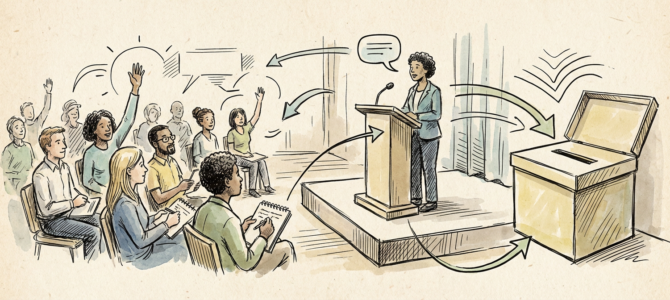
How to Navigate Public Meeting Participation: A Structural Guide to Democratic Engagement

Understanding the Architecture of Public Participation

Public meetings operate within a framework designed to balance transparency, efficiency, and democratic input. This framework isn’t accidental. It grew out of decades of legal requirements, administrative needs, and community pressure for accountability. When you understand this structure, you can work with it effectively instead of fighting against it.

How to Navigate Public Meeting Participation: A Structural Guide to Democratic Engagement

Most public meetings follow Robert’s Rules of Order or similar parliamentary procedures. These rules exist not to exclude participation but to create predictable processes that protect minority voices while enabling decision-making. The typical agenda has public comment periods, old business, new business, and reports. Each segment has a specific function in the democratic machinery.

Here’s the key insight: effective participation requires recognizing which part of the meeting works for your purpose. Emotional appeals might resonate during public comment, but detailed policy analysis belongs in committee discussions. Strategic participation means matching your message to the moment when it will have maximum impact.

Illustration for How to Navigate Public Meeting Participation: A Structural Guide to Democratic Engagement

Timing Your Intervention for Maximum Structural Impact

Public comment periods operate under strict time constraints for good reasons. When thirty people want to speak and the meeting has other business to conduct, time limits prevent any single voice from dominating the discussion. This structural reality means your preparation must account for brevity and focus.

Research shows that comments delivered early in public comment periods get more attention from officials who are still fresh and engaged. But this advantage must be weighed against the strategic value of responding to points raised by previous speakers. The decision depends on whether you’re introducing new information or building on existing themes.

Beyond public comment, many decisions go through multiple readings or committee reviews before final votes. The most effective advocates track these procedural stages and intervene at moments when input can still influence outcomes. First readings often allow for more substantial discussion than final votes, where positions have already hardened.

The sweet spot often occurs in committee meetings where detailed policy work happens with smaller groups and more time for discussion. These meetings typically get less public attention but offer greater opportunity for meaningful dialogue with decision-makers about technical details and implementation challenges.

Documentation and Research as Institutional Memory

Public meetings generate massive amounts of documentation, from agendas and minutes to staff reports and supporting materials. This paper trail isn’t bureaucratic excess but rather the institutional memory that enables consistent decision-making across time and personnel changes. Learning to navigate this documentation system transforms you from casual observer to informed participant.

Staff reports deserve particular attention because they often frame how elected officials understand issues. These reports synthesize complex information, present options, and recommend courses of action. Reading them before meetings allows you to engage with the actual decision-making framework rather than operating from incomplete information.

Budget documents reveal priorities more clearly than mission statements ever could. When officials claim insufficient resources for programs you support, budget line items show exactly how current resources are allocated. This documentation enables evidence-based advocacy that addresses structural constraints rather than assuming bad faith.

Meeting minutes from previous sessions provide context for current discussions and reveal voting patterns over time. They also show which arguments proved persuasive in past decisions, offering models for effective advocacy. This historical perspective prevents you from repeating arguments that have already been considered and rejected.

Building Relationships Within Institutional Structures

Effective public participation extends beyond formal meeting attendance to relationship-building within existing institutional structures. This doesn’t mean backroom dealing but rather understanding how information flows through organizations and where influence actually resides.

Staff members often have more detailed knowledge about issues than elected officials, who juggle multiple complex topics at once. Building respectful relationships with staff can provide insights into implementation challenges, timing considerations, and technical constraints that shape what’s politically possible. These relationships must be based on mutual respect for professional expertise rather than attempts to circumvent democratic processes.

Committee structures exist because complex decisions benefit from specialized knowledge and focused attention. Different committees handle different aspects of governance, from budget and finance to planning and public safety. Understanding which committee oversees your issue of concern allows you to direct your energy where it can accomplish the most.

Coalition-building works within democratic structures by demonstrating broad support for positions. However, effective coalitions require shared understanding of goals and strategies. The most successful advocacy efforts combine diverse voices around specific, achievable objectives rather than vague statements of principle.

Navigating Procedural Barriers and Opportunities

Every public meeting operates within legal frameworks that create both opportunities and constraints for participation. Open meeting laws guarantee access to deliberations but also impose restrictions on how decisions can be made. Understanding these frameworks helps you work within them rather than against them.

Quorum requirements mean that attendance matters for more than symbolic reasons. When key supporters or opponents are absent, the dynamics of decision-making shift in ways that can create unexpected opportunities or risks. Strategic advocates track attendance patterns and adjust their timing accordingly.

Conflict of interest requirements shape which officials can participate in which decisions. These rules exist to protect democratic integrity, but they also create situations where traditional allies may be unable to vote on issues they support. Understanding these constraints prevents disappointment and allows for strategic adjustment.

Appeal processes and procedural remedies provide additional avenues for influence when initial efforts prove unsuccessful. These mechanisms exist within the democratic system precisely to prevent irreversible mistakes and protect minority rights. However, they require understanding specific timelines and procedural requirements to be effective.

The beauty of public meeting participation lies not in any single intervention but in sustained engagement with democratic processes. Each meeting builds institutional memory about community priorities. Each thoughtful comment contributes to the ongoing conversation about shared values and practical solutions. Democracy functions best when citizens understand its machinery well enough to operate it effectively. The next time your local government meets, you’ll be ready to participate not just as an observer but as an informed contributor to the democratic process.

post

Why Your Neighborhood Issue Needs More Than Passion: The Infrastructure of Effective Mobilization

The Anatomy of Sustained Mobilization

When residents discover a proposed development will eliminate their local park, or learn that a major thoroughfare will bisect their neighborhood, the initial response follows a predictable pattern. Outrage builds on social media, neighbors gather in living rooms, and passionate speeches echo through community meetings. Yet most of these efforts dissolve within months, leaving residents frustrated and cynical about their ability to influence local decisions. The difference between fleeting protest and sustained mobilization lies not in the intensity of feeling, but in the deliberate construction of organizational infrastructure.

Why Your Neighborhood Issue Needs More Than Passion: The Infrastructure of Effective Mobilization

Effective neighborhood mobilization requires what organizers call “structural competency” – the ability to build systems that outlast individual enthusiasm. This means establishing clear decision-making processes before emotions run high, creating communication channels that function independently of any single leader, and developing fundraising mechanisms that can sustain long-term campaigns. The neighborhoods that successfully defend their interests understand that passion provides the spark, but only organizational structure provides the engine.

Think about the difference between a Facebook group with 500 angry members and a neighborhood association with 50 committed participants who meet monthly, maintain detailed records of city council voting patterns, and have established relationships with key stakeholders. The latter group has what political scientists call “organizational capacity.” They’ve built the infrastructure necessary to translate individual concerns into collective action that persists beyond the immediate crisis.

Illustration for Why Your Neighborhood Issue Needs More Than Passion: The Infrastructure of Effective Mobilization

Information Architecture as Political Power

The most successful neighborhood campaigns distinguish themselves through superior information systems rather than superior passion. While emotions drive initial engagement, sustained mobilization requires residents to become fluent in the technical language of zoning codes, environmental impact assessments, and municipal budgeting processes. This knowledge gap is the primary structural barrier between neighborhood concerns and policy outcomes.

Effective mobilization creates what researchers call “knowledge democratization.” It builds systems for making complex policy information accessible to residents without advanced degrees in urban planning or public administration. This involves more than simplifying technical language. It requires building ongoing educational infrastructure that helps residents understand how local government actually functions, not how they imagine it functions. Too many neighborhood efforts fail because participants operate on incorrect assumptions about decision-making timelines, legal requirements, or jurisdictional boundaries.

The most sophisticated neighborhood organizations maintain what amounts to institutional memory systems. They document which council members respond to different types of appeals. They track voting patterns across multiple election cycles. They preserve detailed records of previous campaigns. This information architecture transforms residents from supplicants hoping for favorable treatment into informed stakeholders capable of strategic political engagement. When neighbors understand exactly how variance requests move through planning commissions, they can intervene at optimal moments rather than reacting after decisions become irreversible.

Coalition Building Beyond Geographic Boundaries

Neighborhood mobilization often begins with the assumption that geographic proximity naturally creates shared political interests. This assumption leads to strategic limitations that constrain campaign effectiveness. The most impactful neighborhood efforts understand that sustainable political influence requires building coalitions that extend beyond immediate geographic boundaries to include allies who share policy objectives rather than zip codes.

Successful campaigns identify what political scientists call “issue networks.” These are the broader constellation of stakeholders who have interests in similar policy outcomes. A neighborhood opposing a highway expansion might discover natural allies among environmental groups concerned about air quality, business associations worried about traffic disruption, or housing advocates focused on displacement prevention. These coalitions create political leverage that isolated neighborhood groups cannot achieve independently.

The structural challenge involves creating coordination mechanisms that respect the distinct priorities of different coalition members while maintaining focus on shared objectives. This requires what organizers call “strategic alignment.” It’s the ability to frame neighborhood concerns within broader policy narratives that resonate with diverse stakeholders. Rather than arguing that a development should be stopped because “we don’t want it here,” effective campaigns demonstrate how their concerns connect to citywide issues like affordable housing policy, environmental sustainability, or economic development strategies.

Coalition building also requires understanding the different organizational cultures and decision-making processes of potential allies. Environmental groups may prioritize scientific data and policy analysis, while business associations focus on economic impact assessments and regulatory predictability. Successful neighborhood campaigns develop the organizational sophistication necessary to communicate effectively across these different institutional languages and priorities.

Timing and Political Opportunity Structures

The most important factor determining mobilization success often involves timing rather than the merits of neighborhood concerns. Political scientists use the term “opportunity structures” to describe the external political conditions that make certain types of campaigns more likely to succeed at particular moments. Effective neighborhood mobilization requires understanding these temporal dynamics and adjusting strategies accordingly.

Election cycles create predictable opportunity windows when elected officials become more responsive to constituent concerns. Budget preparation periods offer specific moments when neighborhood priorities can be integrated into municipal spending decisions. Changes in city staff leadership, new state legislation, or shifts in federal funding priorities all create potential openings for neighborhood influence that require different tactical approaches.

Understanding opportunity structures also means recognizing when mobilization efforts are unlikely to succeed regardless of organizational quality. A neighborhood group that launches a campaign against a major development three weeks before construction begins faces structural constraints that no amount of passion or organization can overcome. The most effective campaigns begin years before final decisions are made, building relationships and influence gradually rather than attempting to reverse completed policy processes.

This temporal dimension of mobilization explains why successful neighborhood organizations maintain ongoing engagement rather than mobilizing only during crises. They attend routine planning commission meetings, participate in budget hearings, and develop relationships with city staff during quiet periods. This sustained engagement creates what researchers call “political capital.” It’s the accumulated influence that makes officials more likely to consider neighborhood concerns when important decisions arise.

Measuring Success Beyond Individual Victories

Neighborhood mobilization campaigns typically measure success through binary outcomes: they either stopped the unwanted development or they failed. This framework obscures the longer-term structural changes that determine whether neighborhoods develop sustainable political influence. The most effective campaigns understand that individual victories matter less than the organizational capacity built through mobilization processes.

Successful neighborhood organizations evaluate their efforts based on whether campaigns increased residents’ understanding of local government processes, strengthened relationships with potential political allies, and created institutional knowledge that will inform future efforts. A campaign that “loses” its immediate objective but builds lasting organizational capacity often generates more long-term neighborhood influence than a campaign that achieves a short-term victory without creating sustainable political infrastructure.

This perspective requires what organizers call “systems thinking.” It’s the ability to see individual issues within broader patterns of power distribution and policy-making processes. Rather than treating each neighborhood concern as an isolated problem, effective campaigns understand how their efforts connect to citywide debates about development patterns, transportation policy, or environmental protection. This broader perspective helps neighborhoods identify strategic opportunities and avoid duplicating efforts that other organizations are better positioned to lead.

If you’ve read this far, you’re probably already thinking about how these principles apply to issues in your own neighborhood. The next step involves moving beyond individual frustration toward collective analysis. Start by researching one local policy decision that affects your area. Examine the timeline, identify the key stakeholders, and trace how the decision moved through various approval processes. Understanding how the system actually works provides the foundation for everything else.

The Tuesday Morning Test: How One City Council Vote Revealed What Voter Guides Miss

The Missing Context Problem

At 9:30 AM on a Tuesday in Spokane, Washington, the city council voted 4-3 to approve a new homeless services center. The local newspaper ran a straightforward piece about the decision. Three different voter guides had rated the council members on “housing issues” during the previous election. Yet none of those guides predicted how this specific vote would unfold.

This gap between voter guide ratings and actual governance decisions isn’t unusual. It shows the basic problem with local election voter guides: they’re trying to squeeze complex human judgment into neat little boxes, but local politics is messy and full of contradictions. The council member who voted against the homeless center had previously championed affordable housing initiatives. The one who supported it had opposed similar proposals just six months earlier.

Understanding this complexity doesn’t mean voter guides are useless. It means we need to treat them like detectives, not lazy consumers. The best voter guides help you ask better questions. They’re not shortcuts to the right answer.

What Actually Makes a Voter Guide Reliable

The League of Women Voters has been producing voter guides since 1918, and their approach is brilliant in its simplicity. They send identical questions to all candidates, publish responses word-for-word without editing, and clearly mark when candidates don’t respond. No ratings, no endorsements, just raw information. When the Alameda County League asks candidates about transportation priorities, you get actual policy positions instead of someone else’s spin on those positions.

Compare this with guides that assign letter grades or numerical scores. The San Francisco Bay Guardian’s voter guide might rate a candidate A+ on “progressive values,” but what does that mean for someone trying to figure out how that candidate would vote on rent control? The rating system hides the specific policy positions you need to make an informed choice. Good guides show their work. They tell you exactly what questions they asked and give candidates room for real answers.

The most valuable voter guides also admit what they don’t know. Ballotpedia’s candidate surveys clearly distinguish between verified candidate responses and information they gathered from public records or campaign websites. This honesty helps you figure out how much to trust each piece of information.

Following the Money Trail

Campaign finance reports tell stories that candidate questionnaires often miss. When a school board candidate in Austin, Texas receives $15,000 from education technology companies, that’s worth knowing regardless of how they answered questions about classroom resources. These financial relationships don’t automatically disqualify candidates, but they provide context for evaluating their stated positions.

Many states require campaign finance disclosure at the local level, but the information isn’t always easy to find. California’s Secretary of State database lets you search contributions by candidate name, donor, or amount. In Texas, you’ll need to check both state records and local filing offices depending on the race. Some cities like Seattle have their own campaign finance databases with more detailed local information.

Look for patterns, not just individual donations. A city council candidate who receives multiple small donations from teachers, firefighters, and neighborhood association members likely has different priorities than one whose funding comes mostly from real estate developers and business associations. Neither funding pattern is inherently good or bad, but both reveal something about the candidate’s likely governing coalition.

The Endorsement Investigation

Endorsements work like references on a job application, but only if you know who’s doing the recommending. When the local police union endorses a mayoral candidate, that tells you something specific about expected policies on law enforcement. When the Sierra Club makes an endorsement, it signals environmental priorities. But when a group called “Citizens for Better Government” endorses someone, you need to dig deeper.

Real organizations have track records, membership rolls, and clear policy positions. The International Brotherhood of Electrical Workers Local 48 in Portland has been around for decades, represents specific workers, and takes documented positions on labor issues. Their endorsements matter because you know what they stand for. Generic-sounding groups that appear only during election season often hide particular interests or donors.

Cross-reference endorsements with your own priorities. A candidate endorsed by both the local environmental group and the building trades union might be skilled at coalition building, or they might be making incompatible promises to different groups. The endorsement pattern should raise questions, not answer them.

Building Your Own Information Diet

The most informed local voters don’t rely on any single source. They build information systems that capture different perspectives over time. Start by identifying the local news sources that actually cover government meetings. In Minneapolis, MinnPost provides detailed coverage of city council deliberations. In Phoenix, the Arizona Republic’s local government reporter has been tracking municipal issues for years. These reporters often know more about candidate positions than the candidates’ own websites reveal.

Attend candidate forums when possible, but prepare specific questions in advance. Generic forums produce generic answers. Ask about specific policy trade-offs your community faces. If your city is debating whether to fund street improvements or park maintenance, ask candidates how they would prioritize competing infrastructure needs. Their answers reveal thinking processes that matter more than campaign platform bullet points.

Document your research as you go. Keep notes on candidate positions, funding sources, and endorsements in a simple spreadsheet or document. This helps you spot inconsistencies and track whether candidates follow through on campaign promises. Local politics is a long game, and today’s voter guide research becomes next election’s accountability baseline.

The goal isn’t perfect information about imperfect candidates. It’s developing enough understanding to make choices aligned with your own priorities and values. Democracy works best when citizens show up informed, not when they show up certain.

post

The Real Work of Democracy: Building Your Own Government Accountability Toolkit

Why Tracking Government Actually Matters More Than You Think

Here’s something I learned after fifteen years of watching city council meetings: democracy isn’t a spectator sport, but most of us are sitting in the bleachers anyway. We complain about potholes, vote every few years, and assume someone else is keeping track of whether our elected officials actually do what they promise. The truth is more unsettling and more empowering than that.

The Real Work of Democracy: Building Your Own Government Accountability Toolkit

Government accountability tracking isn’t about catching politicians in gotcha moments or feeding partisan outrage machines. It’s about creating a factual record of what actually happens when the cameras aren’t rolling and the headlines have moved on. When I started attending budget hearings in my small Texas city, I discovered that the most important decisions often happen in the least dramatic meetings. The vote to approve a new waste management contract might not make Twitter explode, but it affects every resident’s monthly utility bill for the next five years.

Communities with active government monitoring see better outcomes. A 2019 study by the Government Accountability Office found that local jurisdictions with regular citizen oversight had 23% fewer instances of budget overruns and 31% faster response times to public records requests. But here’s the kicker: this only works when regular people like us actually show up to do the tracking.

Illustration for The Real Work of Democracy: Building Your Own Government Accountability Toolkit

Building Your Evidence Collection System

Good accountability tracking starts with understanding what evidence actually matters. After years of helping neighbors navigate municipal bureaucracy, I’ve learned that the most powerful tool isn’t righteous indignation. It’s a well-organized filing system and the patience to read meeting minutes.

Start with public records that tell the real story. Meeting agendas show priorities, but meeting minutes show what actually got discussed and decided. Budget documents reveal spending patterns, but quarterly financial reports tell you whether departments are hitting their targets. Voting records matter, but the real insights come from tracking how individual council members’ positions change over time on specific issues.

Create a simple tracking spreadsheet with columns for date, issue, key players, promised outcomes, and actual results. I use one tab for each major policy area: infrastructure, public safety, economic development, and community services. Every month, I spend two hours updating it with information from official sources. This isn’t glamorous work, but it’s democracy in action.

Consistency beats perfection here. You don’t need to track every council vote or budget line item. Pick three issues that matter most to your community and follow them religiously. When the mayor promises improved snow removal, document it. When they report progress six months later, verify it. When budget season arrives, you’ll have the receipts.

Separating Facts from Political Theater

Political spin exists at every level of government, from the White House down to your local school board. Learning to identify and cut through it is necessary for good accountability tracking. The good news is that local government spin is usually easier to fact-check than national political claims because the impacts are visible in your own neighborhood.

Watch for three common patterns that signal spin over substance. First, politicians love announcing initiatives without specifying timelines, funding sources, or measurable outcomes. When your city council member talks about “improving public safety,” ask for specific metrics and deadlines. Second, be skeptical of claims that conveniently ignore relevant context. A decrease in crime rates sounds great until you learn that three neighboring cities saw even larger decreases using different strategies.

Third, pay attention to timing games. Politicians often announce popular initiatives just before elections, then quietly delay or modify them afterward. Your tracking system will catch these patterns if you maintain it consistently. I’ve watched council members claim credit for reduced traffic congestion that actually resulted from a state highway project they initially opposed.

The antidote to spin is specificity. Instead of accepting vague promises about “fiscal responsibility,” track actual budget numbers month by month. Instead of nodding along when officials tout “transparent governance,” count how many public records requests get fulfilled on time. Your spreadsheet becomes a truth machine that shows gaps between rhetoric and reality.

Turning Information into Community Action

Collecting government accountability data is only half the battle. The other half is turning that information into constructive community engagement. This is where many well-intentioned tracking efforts fall apart. People gather evidence, get frustrated by what they find, then either burn out from anger or retreat into cynical detachment.

The most effective approach I’ve seen combines strategic patience with tactical precision. Use your tracking data to identify specific, solvable problems rather than broad systemic failures. Instead of declaring that “city council never listens to residents,” document that three consecutive infrastructure proposals have been approved without public input periods. That’s an actionable finding that suggests concrete solutions.

Share your findings with neighbors, but lead with questions rather than accusations. “I’ve been tracking our road repair budget, and I noticed something interesting” opens more productive conversations than “These idiots are wasting our tax money.” People are more likely to engage with curiosity than outrage, especially when you back up your observations with specific data.

Consider organizing quarterly “government report card” gatherings where neighbors can review tracking data together. Make it social, serve coffee, and focus on problem-solving rather than venting. When people see patterns in the data together, they’re more likely to take action together.

Making Democracy Work Through Daily Practice

Government accountability tracking isn’t about becoming a professional watchdog or sacrificing your evenings to endless public meetings. It’s about developing a sustainable practice of civic engagement that fits into your actual life. The goal isn’t perfect oversight but consistent involvement.

Start small and build habits gradually. Commit to reading city council meeting minutes once a month. Set up Google alerts for your local government and school district. Attend one public hearing per quarter on issues that affect your daily life. These small actions add up over time into genuine community knowledge and influence.

Remember that accountability tracking is really about building the community you want to live in. Every time you verify a campaign promise, every time you fact-check a budget claim, every time you document what actually happened at a public meeting, you’re contributing to a culture where evidence matters more than empty rhetoric.

Democracy works best with informed participation, but information without action just becomes trivia. If you’re ready to move beyond hoping for better government and start building it, grab a notebook and find your next city council agenda. Your community needs people who show up with questions, evidence, and the patient determination to see real change through.

post

The Architecture of Unlikely Alliances: How Coalition Building Actually Works

Understanding the Infrastructure of Collaboration

Coalition building operates on principles that most people misunderstand completely. We tend to think about it as finding people who already agree with us, then asking them to join our cause. This approach produces the political equivalent of an echo chamber with a membership roster. Real coalition building works differently. It starts with mapping shared interests across groups that might never socialize together, then creating structured opportunities for those interests to align around specific, winnable objectives.

The Architecture of Unlikely Alliances: How Coalition Building Actually Works

The most effective coalitions emerge when organizations recognize that their separate goals require similar policy changes or resource allocations. Consider how environmental groups and labor unions have successfully partnered on green infrastructure projects. These partnerships don’t happen because tree-huggers suddenly develop deep appreciation for collective bargaining rights, or because steelworkers become passionate about carbon emissions. They work because both groups need the same thing: massive public investment in retrofitting buildings, upgrading transit systems, and building renewable energy infrastructure.

This approach to coalition building requires abandoning the comfortable fiction that political change happens when enough like-minded people get sufficiently motivated. Instead, it demands rigorous analysis of how different groups’ material interests can be addressed simultaneously through coordinated action. Personal relationships matter enormously, but they develop around shared work toward concrete objectives rather than abstract agreement about values.

The Mechanics of Cross-Sector Partnership

Successful coalitions establish clear protocols for how decisions get made, how resources are shared, and how credit gets distributed when victories are won. These operational details determine whether a coalition becomes a genuine partnership or dissolves into competing egos and organizational turf wars. The most durable coalitions create formal structures that prevent any single organization from dominating the agenda while ensuring that all partners can demonstrate value to their own constituencies.

Power mapping becomes essential at this stage. Each potential coalition partner brings different assets: voter databases, technical expertise, established relationships with elected officials, grassroots organizing capacity, or media connections. Effective coalitions systematically inventory these assets and design roles that allow each partner to contribute their strengths while covering for each other’s limitations. A neighborhood association might have deep local credibility but limited policy analysis capacity. A research institute might produce excellent reports but struggle to turn out residents for public meetings.

The distribution of roles also addresses the practical reality that different organizations face different constraints. A 501(c)(3) nonprofit cannot engage in partisan electoral activity, but a labor union can. A business association might hesitate to support policies that appear too progressive, while a community organization might need to maintain credibility with members who distrust corporate involvement. Successful coalitions design strategies that allow each partner to participate in ways that advance the collective goal without compromising their individual organizational interests.

Navigating Ideological Tensions Without Losing Focus

The most challenging aspect of coalition building involves managing fundamental disagreements about long-term vision while maintaining unity around short-term objectives. Partners in effective coalitions often hold incompatible views about the proper role of government, the causes of social problems, or the ultimate goals of political action. These differences cannot be resolved through discussion or compromise. They must be actively managed through coalition structures that separate ideological disputes from practical work.

This management happens through careful issue framing and strategic sequencing of campaign activities. A coalition supporting affordable housing might include progressive organizations that view housing as a human right alongside business groups that simply want a more stable workforce. The coalition’s public messaging focuses on shared concerns about housing costs and community stability rather than broader theories about market regulation or wealth redistribution. Internal discussions stay focused on tactical questions about zoning changes, financing mechanisms, and implementation timelines.

The sequencing of campaign activities also helps manage tensions. Early coalition work often centers on research, public education, and relationship building with elected officials. These activities allow partners to collaborate effectively while avoiding the more contentious questions about protest tactics, electoral strategies, or long-term policy goals. As the coalition demonstrates its effectiveness on smaller objectives, trust develops that enables partners to tackle more ambitious projects despite their continuing ideological differences.

Building Sustainable Systems Rather Than Temporary Alliances

The difference between successful coalition building and temporary political convenience lies in whether the partnership creates lasting institutional relationships that can survive specific campaign cycles. One-off collaborations around ballot measures or candidate endorsements rarely produce the organizational infrastructure necessary for sustained political influence. Durable coalitions establish ongoing communication systems, shared decision-making processes, and regular evaluation of collective effectiveness.

Institutional sustainability requires investing in the unglamorous work of maintaining relationships between campaign cycles. This includes hosting regular information-sharing meetings, developing joint training programs, creating shared resource pools, and establishing conflict resolution procedures. Many coalitions collapse not because their original objectives become irrelevant, but because partners stop investing in the relationship maintenance that allows them to respond quickly when new opportunities or threats emerge.

The most sophisticated coalitions also develop leadership development pipelines that prepare multiple people from each partner organization to represent their interests effectively. This prevents coalitions from becoming dependent on particular personalities while building broader organizational capacity for collaborative work. When coalition work becomes part of how organizations routinely conduct their business rather than a special project requiring extraordinary effort, the partnership becomes genuinely sustainable.

Measuring Success Beyond Individual Victories

Effective coalitions establish metrics that capture their impact on both specific policy outcomes and the broader political landscape. Traditional campaign measures focus on whether particular bills pass or candidates win elections. Coalition evaluation requires additional measures that assess whether the partnership has shifted power relationships, created new opportunities for future collaboration, or demonstrated that diverse groups can work together effectively on complex issues.

Long-term coalition success often becomes visible in how elected officials and other political actors adjust their own strategies in response to demonstrated coalition capacity. When coalitions establish track records of effective collaboration, they gain access to earlier stages of policy development rather than being forced into reactive positions. Elected officials begin consulting coalition partners before introducing legislation rather than after opposition has mobilized. Media coverage starts treating coalition positions as significant political developments rather than expected partisan responses.

These shifts in political dynamics create opportunities for coalitions to influence issues beyond their original focus areas. A coalition that successfully collaborated on education funding might find itself consulted on transportation policy because elected officials recognize their capacity to build broader public support for complex initiatives. This institutional influence becomes a form of political capital that effective coalitions can deploy strategically to advance their long-term objectives while maintaining their organizational partnerships.

The mechanics of coalition building reveal themselves most clearly in local contexts where the stakes are concrete and the players are accessible. If you want to understand how this process works in practice, start by identifying an issue in your community where different types of organizations share overlapping interests, then investigate how they currently coordinate their efforts or why they don’t. The patterns you observe will illuminate both the possibilities and the challenges that shape political collaboration in every context.

post

Reading Your City Budget Like a 19th Century Reformer: What Municipal Progressives Can Teach Us Today

The Budget as Democratic Mirror: Lessons from the Gilded Age

When Jacob Riis walked the streets of New York in the 1880s documenting tenement conditions, he got something that modern civic engagement often misses: a city’s budget tells the truest story of its values. The municipal reformers of the Progressive Era didn’t just rail against corruption in abstract terms. They learned to read line items like tea leaves, tracking how public dollars flowed between neighborhoods, noting which departments received generous funding and which scraped by on table scraps.

Reading Your City Budget Like a 19th Century Reformer: What Municipal Progressives Can Teach Us Today

Today’s city budget documents arrive as PDFs rather than leather-bound ledgers, but they work the same democratic function they did 140 years ago. They reveal, in stark numerical terms, whether a city government prioritizes public safety over public health, economic development over environmental protection, or downtown business districts over residential neighborhoods. The reformers of the 1890s understood that budget analysis wasn’t wonky work for specialists. It was citizenship in its most practical form.

Consider how the settlement house movement used budget advocacy to transform urban policy. Jane Addams and her contemporaries didn’t just provide social services through Hull House. They systematically documented municipal spending patterns, attended city council meetings with prepared testimony, and built coalitions that could speak the language of fiscal responsibility while advocating for expanded public investment in immigrant communities. Their approach offers a template for contemporary civic engagement that remains remarkably relevant.

Following the Money Trail: Where Progressive Era Tactics Still Apply

The municipal reformers of the 1890s developed what we might now call “participatory budgeting” techniques, though they wouldn’t have recognized the term. They organized neighborhood committees to review proposed expenditures. They held public forums to debate capital improvement projects. They created citizen oversight groups that monitored contract awards. Most importantly, they treated budget season as democracy season, understanding that annual spending decisions shaped daily life more directly than election cycles.

This historical approach translates remarkably well to modern municipal analysis. Start where the Progressive Era reformers started: by identifying the biggest line items and asking basic questions about proportionality. Does your city spend more on police overtime than on after-school programs? How does capital spending break down geographically? Are maintenance budgets for parks and recreation adequate to preserve existing infrastructure, or does deferred maintenance suggest different priorities?

The reformers also pioneered what we now call “outcome-based budgeting” by tracking whether municipal spending actually solved community problems. They didn’t just advocate for more funding for public health departments. They monitored tuberculosis rates, infant mortality statistics, and sanitation improvements to measure whether increased investment produced measurable results. This evidence-based approach to budget advocacy proved far more effective than moral arguments alone.

Department by Department: The Anatomy of Municipal Priorities

Progressive Era budget analysis focused heavily on what reformers called “productive versus protective” spending. Productive investments built infrastructure, expanded educational opportunities, and created conditions for economic growth. Protective spending maintained existing systems and responded to immediate crises. Both categories were necessary, but reformers argued that cities trapped in purely reactive budget cycles would never address underlying social problems.

This framework remains useful for analyzing contemporary municipal budgets. Look at how your city balances investments in economic development against spending on social services. Economic development departments often receive funding for business incentive programs, tourism promotion, and downtown revitalization projects. Meanwhile, human services departments may operate with skeleton crews and waiting lists for basic assistance programs. Neither approach is inherently wrong, but the balance reflects political priorities that deserve public scrutiny.

Infrastructure spending offers another revealing lens for budget analysis. Progressive Era reformers understood that municipal infrastructure investments were fundamentally about equity. Sewer systems, street paving, and electric lighting weren’t distributed randomly across urban neighborhoods. They followed patterns of political influence and property values. Contemporary capital improvement budgets follow similar logic. Which neighborhoods receive sidewalk repairs, traffic calming measures, and park improvements? Which areas wait years for basic infrastructure maintenance?

Personnel costs typically represent the largest portion of any municipal budget, and here the historical parallel becomes particularly instructive. Progressive reformers fought for civil service systems and professional administration partly to ensure that public employees worked for community interests rather than political machines. Modern budget analysis should examine whether staffing levels match stated municipal priorities. Does your city employ more code enforcement officers than social workers? How many staff members work on economic development compared to environmental protection?

Revenue Sources: Understanding the Other Half of the Equation

Progressive Era municipal reformers understood that sustainable government required diversified revenue sources that didn’t place disproportionate burdens on working families. They advocated for progressive taxation systems, utility taxes that captured revenue from corporate infrastructure use, and special assessments that required property developers to help fund the infrastructure their projects demanded.

Contemporary revenue analysis requires similar attention to equity and sustainability. Most municipal budgets rely heavily on property taxes, sales taxes, and various fees and permits. Property taxes tend to be relatively stable but can burden long-term residents when rapid development drives up assessments. Sales taxes generate significant revenue but disproportionately impact lower-income households. Fee-based revenue from permits, licenses, and fines can create perverse incentives for city departments to prioritize revenue generation over service delivery.

Many cities also depend significantly on state and federal grants, revenue sharing programs, and special districts that operate with dedicated tax streams. These funding sources often come with restrictions that shape how money can be spent, creating a complex web of fiscal relationships that weren’t present during the Progressive Era. Understanding these constraints helps explain why municipal leaders sometimes seem unable to address obvious community needs despite apparently adequate budgets.

Making Budget Analysis Work for Your Community

The most important lesson from Progressive Era municipal reform might be this: budget analysis works best as a collective enterprise. The settlement house movement succeeded because it combined detailed research with broad community organizing. Individual reformers gathered data, but neighborhood committees provided political pressure, and coalitions of civic groups sustained advocacy efforts across multiple budget cycles.

Start by identifying other community members who share your interest in municipal governance. Many cities have established neighborhood councils, taxpayer associations, or issue-specific advocacy groups that already engage in budget analysis. If such groups don’t exist in your community, consider the Progressive Era approach: begin with informal study circles that meet regularly to review budget documents and share research responsibilities.

Remember that effective budget advocacy requires both technical knowledge and political strategy. Learn to read budget documents, but also learn when city council members make key decisions, how public comment periods work, and which local media outlets cover municipal government. The Progressive reformers understood that democracy requires both informed citizens and accessible institutions.

Your city’s budget document contains thousands of small decisions that shape daily life in ways that rarely make headlines. Someone decided how many librarians to employ, whether to fund additional park maintenance, and how much to spend on street repairs in your neighborhood. These decisions didn’t happen in a vacuum. They resulted from a political process that you can influence, but only if you’re willing to do the homework that citizenship requires. The reformers of the 1890s proved that ordinary people can master municipal finance when they work together and stay persistent. That lesson is as relevant today as it was during the Gilded Age.

post

The Toolkit That Actually Works: Four Community Organizing Tactics That Change Things

Start Where People Already Gather

The best community organizers I know don’t start by calling meetings. They start by showing up where people already are. Your neighborhood coffee shop, the Saturday farmer’s market, the pickup line at the elementary school, the community center’s evening fitness classes. These places buzz with the informal networks that actually hold communities together. And they’re where real conversations happen without all the stiff formality of political settings.

The Toolkit That Actually Works: Four Community Organizing Tactics That Change Things

This works because it respects people’s time and routines. Instead of asking tired parents to attend another evening meeting, you meet them where they’re already spending time. You listen before you talk. You discover what issues actually keep people up at night, rather than assuming you know what matters most to your neighbors.

The key is patience and real curiosity. Spend weeks just listening. Ask open-ended questions about what people love about the neighborhood and what drives them crazy. Take notes. When Mrs. Rodriguez mentions that the crosswalk near the school feels dangerous, or when three different people gripe about the lack of evening bus service, you’re gathering the raw material for effective organizing. These aren’t just complaints. They’re entry points for getting people involved.

Build Your Power Map Before You Make Your Moves

Every successful campaign starts with understanding who holds power and how decisions actually get made in your community. This isn’t about conspiracy theories or backroom deals. It’s recognizing that influence flows through predictable channels, and you can learn to navigate those channels.

Create a visual map with your target decision-maker at the center. Draw lines connecting them to everyone who influences their choices: staff members, major donors, longtime friends, business partners, family members, political allies. Include the people they see at their gym, their church, their professional groups. Power is often personal. Understanding these relationships gives you strategic options beyond just showing up at public meetings to make speeches.

Then figure out which of these influential people you might reach through your own networks. Your cousin might work at the same law firm as the city council member’s chief of staff. Your book club might include someone who sits on the same nonprofit board as the mayor. The parent who volunteers with you at school fundraisers might be married to the planning commissioner’s longtime business partner. These connections aren’t about asking for favors. They’re about finding real pathways for productive conversations.

Make the Ask Concrete and Time-Bound

Vague requests get you vague responses. “We want better public transportation” gets you sympathetic nods and no action. “We want the city to add evening bus service on Route 47, with buses running until 10 PM on weekdays, starting with the next budget cycle” gives decision-makers something specific to evaluate, cost out, and either approve or reject with clear reasoning.

Smart organizers think like project managers. They break big goals into smaller, doable steps with clear deadlines. Instead of demanding an immediate solution to affordable housing, they might ask the city council to commit to a specific timeline for reviewing zoning rules that block apartment construction. Instead of calling for general police reform, they might request that the police department implement a particular de-escalation training program within six months.

This specificity works on multiple levels. It shows you’ve done your homework and understand the real constraints decision-makers face. It makes progress measurable, so everyone can see whether promises are being kept. And it builds momentum through small wins that prepare your group for tackling bigger challenges later.

Turn Individual Conversations Into Collective Action

The magic happens when you connect all those individual concerns into a shared agenda that lots of people care about. This means moving beyond single-issue fights to build what organizers call “broad-based organizations” that can tackle multiple challenges over time.

Start with one-on-one conversations, but don’t end there. Organize small house parties where neighbors can meet each other and discover shared concerns. Host walking tours of problem areas so people can see issues through each other’s eyes. Set up informal forums where different community groups can find common ground on solutions.

As these connections grow stronger, you can start planning coordinated actions that show broad community support. This might mean organizing a packed city council meeting where a dozen people tell personal stories about how a particular issue affects their families. It might involve coordinating letter-writing campaigns where residents from different neighborhoods all contact their representatives about the same proposal on the same day.

The goal isn’t just winning on specific issues, although that matters enormously. You’re building the civic muscle that makes future organizing efforts more effective. People who successfully fight for a new stop sign this year become confident advocates for affordable housing next year. Neighbors who learn to research budget proposals and speak at public meetings become informed voters who understand how local government actually works.

Celebrate Progress and Plan for the Long Game

Real community organizing is a marathon, not a sprint. This means celebrating small progress rather than waiting for perfect solutions. It means building organizations that can outlast any single campaign or issue.

When you achieve a small victory, make sure people understand their role in creating that success. Send thank-you notes that specifically mention individual contributions. Host celebration events that bring people together to reflect on what they accomplished and plan next steps. Share credit generously, especially with people who might be hesitant about taking on visible leadership roles.

Plan for leadership development from day one. Rotate who runs meetings and gives presentations so multiple people gain experience. Create opportunities for different community members to represent the group at various events. Set up systems for sharing institutional knowledge so your organization doesn’t depend entirely on any single person’s expertise or connections.

Remember that the relationships you build matter as much as the specific policies you change. A neighborhood where people know each other, trust each other, and have experience working together becomes a community that can tackle whatever challenges come up over time. That’s the real victory: creating civic capacity that lasts long after any individual organizing campaign ends.

These tactics work because they respect both the messiness of democratic decision-making and the intelligence of ordinary citizens. Start with one approach that feels manageable to you, whether that’s spending time listening in community spaces or mapping the power relationships around an issue you care about. Democracy gets stronger when more people understand how to engage with it effectively.