post

Global rise of nationalist movements: Political economy

This is one of those moments where paying attention changes what you do next. The topic of global rise of nationalist movements rewards more careful attention than the typical coverage provides, and the reason is not complicated once you know where to look.

The part of this that most people miss is also the part that matters most: when you look at this through a political economy lens, economic anxiety and immigration are combining as the primary ways these movements recruit people. The investigative read of the situation is also the more accurate one once you examine what the evidence actually shows.

Global rise of nationalist movements: Political economy

The Economy: Setting the Terms

Far-right parties are now in coalition government across 8 EU member states as of 2026. This isn’t just another data point in the story of global rise of nationalist movements. It’s the structural condition that makes everything else in this analysis make sense. Context like this doesn’t age quickly. The conditions that produced it have been building for years, and the convergence is what makes the current moment different from previous moments that looked similar from a distance.

Economic anxiety and immigration are combining as primary recruitment vectors, while online pipelines move people from mainstream to extreme content. When you look at both together, a pattern emerges that ECFR European politics analysis has been covering from the inside: the conditions are more durable than they first appear, and the implications reach further than the immediate headline suggests.

To understand why this matters, it helps to look at what was true three years ago versus what is true now. The change is not simply about numbers. It’s about quality. The participants, the infrastructure, and the incentive structures have all shifted in ways that build on each other rather than cancel out. That compounding effect is the most important element to track.

What makes this moment worth examining carefully is not the novelty but the confirmation. The underlying dynamics have been visible for some time. What is new is that they have reached a threshold where ignoring them requires active effort rather than simple inattention. That threshold crossing is the event, not the underlying movement that produced it.

And the mainstreaming of previously fringe positions is accelerating under social media dynamics as part of that same picture. These elements don’t exist in separate silos. They’re reinforcing conditions in the same structural shift.

The Follow-the-Money: The Analysis

The mainstreaming of previously fringe positions accelerating under social media dynamics is where the analysis gets more specific. The surface reading is accessible and not wrong, but it misses the mechanism. And the mechanism is where the practical insight lives. The part of this that most people miss is also the part that matters most: anti-establishment rhetoric works effectively across the entire left-right spectrum simultaneously, and understanding it changes what you do with the information.

Consider what anti-establishment rhetoric working across the left-right spectrum simultaneously represents in context. It’s not a correlation that happened to appear. It’s a downstream consequence of structural factors that have been compounding. Previous readings of similar situations failed because they treated the symptom as the cause. The structural account is less satisfying as a headline but more useful as an analytical tool.

The comparison to prior cycles is instructive precisely because of where it breaks down. Superficially similar conditions resolved differently in previous iterations because the substrate was different. What we’re seeing with civil society organizations facing funding cuts and legal pressure in multiple states represents a substrate change, the kind that alters how elastic the system is rather than just its current value. Recognizing that distinction is what separates analysis from pattern-matching.

The skeptical counterargument deserves honest engagement: prior moments with similar surface characteristics did not produce the outcomes that seemed logical at the time. That history is real. What’s different now is civil society organizations facing funding cuts and legal pressure in multiple states, which is not a minor variable. It’s the infrastructure condition that previous cycles lacked. Infrastructure changes tend to be persistent in ways that sentiment-driven changes are not. Vox policy explainers is one source tracking this dimension with the rigor it requires.

There’s also a distributional question that often goes unaddressed in coverage of global rise of nationalist movements: who captures the value created by these shifts, and who absorbs the disruption costs? The aggregate picture can be positive while the distribution is uneven in ways that matter enormously to specific participants. Keeping that distributional lens in view is part of reading the situation clearly rather than simply optimistically.

Implications: What This Means If You Care About Lobbying and industry influence

The implications of global rise of nationalist movements extend beyond the immediate context. Far-right parties in coalition government across 8 EU member states as of 2026 combined with the structural conditions described above creates a situation where adjacent fields, decisions, and communities are affected in ways that aren’t always visible from inside the primary story. The second-order effects are frequently more important than the first-order ones, and they’re where careful attention pays the highest returns.

The frame that matters here, and this is where this perspective departs from the mainstream coverage, is that online pipelines moving people from mainstream to extreme content are a leading indicator rather than a lagging one. The people positioned to respond to what this signals, rather than to what it confirms, are the ones who will be less surprised by what follows.

The practical response depends heavily on your position relative to the dynamics at play. For those closest to the core of global rise of nationalist movements, the implications are immediate and operational. For those at greater distance, the implications are strategic, a matter of understanding which adjacent pressures are building and which assumed stabilities are more fragile than they appear.

The practical question is not whether to engage with these dynamics but how. The answer depends on context, on what role you occupy relative to global rise of nationalist movements and what your actual decision horizon is. But the first step is the same regardless: accurate understanding of what’s actually happening rather than what the most available narrative says is happening.

A few concrete observations are worth separating out from the broader analysis. First: economic anxiety and immigration combining as primary recruitment vectors is not a temporary condition. It’s a new baseline. Second: anti-establishment rhetoric working effectively across the left-right spectrum simultaneously suggests that the adjustment period is not over. Third, and most important: the organizations and individuals who are treating the current moment as a new steady state rather than a transition are making a categorization error that will be costly to unwind later.

The Case Against: What the Critics Get Right

Intellectual honesty requires acknowledging the strongest counterarguments, not just the weakest ones. The case against the optimistic reading of global rise of nationalist movements is not trivial. There are structural vulnerabilities in the current picture that deserve direct engagement rather than dismissal.

The most serious objection is the one about sustainability. Online pipelines moving people from mainstream to extreme content can be read not as a foundation but as a ceiling, a point beyond which growth becomes self-limiting because of the very dynamics that produced it. If the current state has already incorporated most of the available supply of early-adopting participants, the remaining growth curve may be structurally shallower than the recent trajectory implies.

There’s also the policy and regulatory dimension. Far-right parties in coalition government across 8 EU member states as of 2026 describes a condition in a relatively permissive environment. Regulatory responses to the scale implied by these numbers aren’t inevitable, but they’re not implausible either. The organizations that are planning as though the current regulatory environment is permanent are making an assumption that the history of fast-growing sectors does not support.

The rebuttal to these concerns is not that they’re wrong. It’s that they’re already partially priced into the current state of the field. Civil society organizations facing funding cuts and legal pressure in multiple states reflects an environment where participants are already adapting to constraints rather than operating in an unconstrained space. The adjustment capacity of the ecosystem is higher than a purely top-down view of the risks suggests.

Looking Forward

The trajectory here is clearer than the pace. Making predictions about when specific thresholds will be crossed is genuinely difficult, and anyone claiming precision about timelines should be treated with skepticism. But the direction, toward far-right parties in coalition government across 8 EU member states and continued development of the conditions described above, is supported by the evidence in a way that doesn’t depend on a single variable going right.

Civil society organizations facing funding cuts and legal pressure in multiple states is the variable to watch as the leading indicator. Historical patterns suggest it moves first, with broader metrics following with some lag. This doesn’t make the outcome certain, but it makes it readable. And readability is the precondition for good decisions.

Three questions are worth holding as the story develops. First: are the structural conditions that enabled the current state durable, or are they cyclical? Second: who is positioned to benefit from the next phase, and does that differ materially from who benefited in the current phase? Third: what would a clean falsification of the optimistic thesis look like, and is there any evidence of that signal emerging? These questions don’t need answers today, but having asked them changes what you notice in the months ahead.

The action from here is straightforward, even when the situation is not. The current moment in global rise of nationalist movements is one where the people who have built an accurate model of the underlying dynamics are better positioned than the people who are relying on the surface story. Building that model is not a quick task, but it is a doable one. And this analysis is intended as one input into it.

What are we missing in the financial trail? Add sources if you have them.

Climate policy and the green transition debate: Historical context

This is one of those moments where paying attention changes what you do next. The topic of climate policy and the green transition debate rewards more careful attention than the typical coverage provides, and the reason isn’t complicated once you know where to look.

The part of this that most people miss is also the part that matters most: carbon pricing now covers 23 percent of global emissions under various schemes. The scholarly but readable take on this situation is also the more accurate one once you examine what the evidence actually shows.

The Context: Setting the Terms

The IPCC Sixth Assessment Report sets 2030 as a critical decision point. This isn’t just another data point in climate policy debates, it’s the structural condition that makes everything else in this analysis make sense. Context like this doesn’t age quickly. The conditions that produced it have been building for years, and the convergence is what makes this moment different from previous ones that looked similar from a distance.

Carbon pricing now covers 23 percent of global emissions under various schemes, and green industrial policy is driving massive public investment in the US, EU, and China. When you look at both together, a pattern emerges that Carbon Brief climate analysis has been covering from the inside: the conditions are more durable than they first appear, and the implications extend further than the immediate headline suggests.

To understand why this matters, look at what was true three years ago versus what’s true now. The change isn’t simply quantitative, it’s qualitative. The participants, the infrastructure, and the incentive structures have all shifted in ways that compound rather than cancel out. That compounding is the most important element to track.

What makes this moment worth examining carefully isn’t the novelty but the confirmation. The underlying dynamics have been visible for some time. What’s new is that they’ve reached a threshold where ignoring them requires active effort rather than simple inattention. That threshold crossing is the event, not the underlying movement that produced it.

Just transition debates highlighting unequal burden on fossil fuel communities fit into that same picture. These elements don’t exist in separate silos. They’re reinforcing conditions in the same structural shift.

The Historical Parallel: The Analysis

Just transition debates highlighting unequal burden on fossil fuel communities is where the analysis gets more specific. The surface reading is accessible and not wrong, but it misses the mechanism. And the mechanism is where the practical insight lives. The part most people miss is the mechanism itself: the loss and damage fund for vulnerable nations agreed at COP27 but left underfunded. Understanding it changes what you do with the information.

Consider what this underfunded loss and damage fund represents in context. It’s not a correlation that happened to appear. It’s a downstream consequence of structural factors that have been compounding. Previous readings of similar situations failed because they treated the symptom as the cause. The structural account is less satisfying as a headline but more useful as an analytical tool.

The comparison to prior cycles is instructive precisely because of where it breaks down. Similar-looking conditions resolved differently in previous iterations because the substrate was different. Corporate net-zero pledges now under scrutiny for greenwashing represents a substrate change, the kind that alters how elastic the system is rather than just its current value. Recognizing that distinction separates analysis from pattern-matching.

The skeptical counterargument deserves honest engagement: prior moments with similar surface characteristics didn’t produce the outcomes that seemed logical at the time. That history is real. What’s different now is corporate net-zero pledges under scrutiny for greenwashing claims, which isn’t a minor variable. It’s the infrastructure condition that previous cycles lacked. Infrastructure changes tend to be persistent in ways that sentiment-driven changes aren’t. Climate Policy Initiative is one source tracking this dimension with the rigor it requires.

There’s also a distributional question that often goes unaddressed in coverage of climate policy and the green transition debate: who captures the value created by these shifts, and who absorbs the disruption costs? The aggregate picture can be positive while the distribution is uneven in ways that matter enormously to specific participants. Keeping that distributional lens in view is part of reading the situation clearly rather than simply optimistically.

Implications: What This Means If You Care About Election parallels

The implications of climate policy and the green transition debate extend beyond the immediate context. The IPCC Sixth Assessment Report setting 2030 as a critical decision point, combined with the structural conditions described above, creates a situation where adjacent fields, decisions, and communities are affected in ways that aren’t always visible from inside the primary story. The second-order effects are frequently more important than the first-order ones, and they’re where careful attention pays the highest returns.

The frame that matters here, and this is where this perspective departs from mainstream coverage, is that green industrial policy driving massive public investment in the US, EU, and China is a leading indicator rather than a lagging one. The people positioned to respond to what this signals, rather than to what it confirms, are the ones who will be less surprised by what follows.

The practical response depends heavily on your position relative to the dynamics at play. For those closest to the core of climate policy and the green transition debate, the implications are immediate and operational. For those at greater distance, the implications are strategic, a matter of understanding which adjacent pressures are building and which assumed stabilities are more fragile than they appear.

The practical question isn’t whether to engage with these dynamics but how. The answer depends on context, on what role you occupy relative to climate policy and the green transition debate and what your actual decision horizon is. But the first step is the same regardless: accurate understanding of what’s actually happening rather than what the most available narrative says is happening.

A few concrete observations are worth separating out from the broader analysis. First: carbon pricing now covering 23 percent of global emissions under various schemes isn’t a temporary condition. It’s a new baseline. Second: the underfunded loss and damage fund for vulnerable nations agreed at COP27 suggests that the adjustment period isn’t over. Third, and most important: the organizations and individuals who are treating the current moment as a new steady state rather than a transition are making a categorization error that will be costly to unwind later.

The Case Against: What the Critics Get Right

Intellectual honesty requires acknowledging the strongest counterarguments, not just the weakest ones. The case against the optimistic reading of climate policy and the green transition debate isn’t trivial. There are structural vulnerabilities in the current picture that deserve direct engagement rather than dismissal.

The most serious objection is the one about sustainability. Green industrial policy driving massive public investment in the US, EU, and China can be read not as a foundation but as a ceiling, a point beyond which growth becomes self-limiting because of the very dynamics that produced it. If the current state has already incorporated most of the available supply of early-adopting participants, the remaining growth curve may be structurally shallower than the recent trajectory implies.

There’s also the policy and regulatory dimension. The IPCC Sixth Assessment Report setting 2030 as a critical decision point describes a condition in a relatively permissive environment. Regulatory responses to the scale implied by these numbers aren’t inevitable, but they’re not implausible either. The organizations that are planning as though the current regulatory environment is permanent are making an assumption that the history of fast-growing sectors doesn’t support.

The rebuttal to these concerns isn’t that they’re wrong. It’s that they’re already partially priced into the current state of the field. Corporate net-zero pledges under scrutiny for greenwashing claims reflects an environment where participants are already adapting to constraints rather than operating in an unconstrained space. The adjustment capacity of the ecosystem is higher than a purely top-down view of the risks suggests.

Looking Forward

The trajectory here is clearer than the pace. Making predictions about when specific thresholds will be crossed is genuinely difficult, and anyone claiming precision about timelines should be treated with skepticism. But the direction, toward the IPCC’s 2030 decision point and continued development of the conditions described above, is supported by the evidence in a way that doesn’t depend on a single variable going right.

Corporate net-zero pledges under scrutiny for greenwashing claims is the variable to watch as the leading indicator. Historical patterns suggest it moves first, with broader metrics following with some lag. This doesn’t make the outcome certain, but it makes it legible. And legibility is the precondition for good decisions.

Three questions are worth holding as the story develops. First: are the structural conditions that enabled the current state durable, or are they cyclical? Second: who is positioned to benefit from the next phase, and does that differ materially from who benefited in the current phase? Third: what would a clean falsification of the optimistic thesis look like, and is there any evidence of that signal emerging? These questions don’t need answers today, but having asked them changes what you notice in the months ahead.

The action from here is straightforward, even when the situation isn’t. The current moment in climate policy and the green transition debate is one where the people who have built an accurate model of the underlying dynamics are better positioned than the people who are relying on the surface story. Building that model isn’t a quick task, but it’s a tractable one. This analysis is intended as one input into it.

What other historical parallel belongs here? The comments are a good place to extend the argument.

The Real Picture on Digital democracy and online political organising

This is one of those moments where paying attention changes what you do next. The topic of digital democracy and online political organising rewards more careful attention than the typical coverage provides, and the reason is not complicated once you know where to look.

The part of this that most people miss is also the part that matters most: viewed through the lens of political economy, WhatsApp and Telegram groups are driving local political mobilisation globally. The investigative read of the situation is also the more accurate one once you examine what the evidence actually shows.

The Economy: Setting the Terms

72 percent of voters under 35 report social media as their primary political news source. This isn’t just a data point, it’s the structural condition that makes everything else in this analysis make sense. Context like this doesn’t age quickly. The conditions that produced it have been building for years, and the convergence is what makes right now different from previous moments that looked similar from a distance.

WhatsApp and Telegram groups are driving local political mobilisation globally while algorithmic amplification of outrage content gets documented across all major platforms. When you look at both together, a pattern emerges that Brennan Center democracy research has been covering from the inside: the conditions are more durable than they first appear, and the implications extend further than the immediate headline suggests.

To understand why this matters, it helps to look at what was true three years ago versus what is true now. The change isn’t simply quantitative, it’s qualitative. The participants, the infrastructure, and the incentive structures have all shifted in ways that compound rather than cancel out. That compounding is the most important element to track.

What makes this moment worth examining carefully is not the novelty but the confirmation. The underlying dynamics have been visible for some time. What’s new is that they have reached a threshold where ignoring them requires active effort rather than simple inattention. That threshold crossing is the event, not the underlying movement that produced it.

And foreign influence operations are active on X, Facebook, and TikTok ahead of every major election. This is part of that same picture. These elements don’t exist in separate silos, they’re reinforcing conditions in the same structural shift.

The Follow-the-Money: The Analysis

Foreign influence operations active on X, Facebook, and TikTok ahead of every major election is where the analysis gets more specific. The surface reading is accessible and not wrong, but it misses the mechanism, and the mechanism is where the practical insight lives. The part of this that most people miss is also the part that matters most: the mechanism is open-source tools for canvassing and voter contact that are now standard in campaigns, and understanding it changes what you do with the information.

Consider what open-source tools for canvassing and voter contact now being standard in campaigns actually represents in context. It’s not a correlation that happened to appear, it’s a downstream consequence of structural factors that have been compounding. Previous readings of similar situations failed because they treated the symptom as the cause. The structural account is less satisfying as a headline but more useful as an analytical tool.

The comparison to prior cycles is instructive precisely because of where it breaks down. Superficially similar conditions resolved differently in previous iterations because the substrate was different. Digital fundraising lowering barriers but increasing reliance on small-dollar micro-donors represents a substrate change, the kind that alters the elasticity of the system rather than just its current value. Recognising that distinction is what separates analysis from pattern-matching.

The skeptical counterargument deserves honest engagement: prior moments with similar surface characteristics didn’t produce the outcomes that seemed logical at the time. That history is real. What’s different now is digital fundraising lowering barriers but increasing reliance on small-dollar micro-donors, which isn’t a minor variable, it’s the infrastructure condition that previous cycles lacked. Infrastructure changes tend to be persistent in ways that sentiment-driven changes are not. Democracy Now is one source tracking this dimension with the rigour it requires.

There’s also a distributional question that often goes unaddressed in coverage of digital democracy and online political organising: who captures the value created by these shifts, and who absorbs the disruption costs? The aggregate picture can be positive while the distribution is uneven in ways that matter enormously to specific participants. Keeping that distributional lens in view is part of reading the situation clearly rather than simply optimistically.

Implications: What This Means If You Care About Lobbying and industry influence

The implications of digital democracy and online political organising extend beyond the immediate context. 72 percent of voters under 35 reporting social media as their primary political news source combined with the structural conditions described above creates a situation where adjacent fields, decisions, and communities get affected in ways that aren’t always visible from inside the primary story. The second-order effects are frequently more important than the first-order ones, and they’re where careful attention pays the highest returns.

The frame that matters here, and this is where this perspective departs from the mainstream coverage, is that algorithmic amplification of outrage content documented across all major platforms is a leading indicator rather than a lagging one. The people positioned to respond to what this signals, rather than to what it confirms, are the ones who will be less surprised by what follows.

The practical response depends heavily on your position relative to the dynamics at play. For those closest to the core of digital democracy and online political organising, the implications are immediate and operational. For those at greater distance, the implications are strategic, a matter of understanding which adjacent pressures are building and which assumed stabilities are more fragile than they appear.

The practical question isn’t whether to engage with these dynamics but how. The answer depends on context, on what role you occupy relative to digital democracy and online political organising and what your actual decision horizon is. But the first step is the same regardless: accurate understanding of what’s actually happening rather than what the most available narrative says is happening.

A few concrete observations are worth separating out from the broader analysis. First: WhatsApp and Telegram groups driving local political mobilisation globally isn’t a temporary condition, it’s a new baseline. Second: open-source tools for canvassing and voter contact now being standard in campaigns suggests that the adjustment period isn’t over. Third, and most important: the organisations and individuals who are treating the current moment as a new steady state rather than a transition are making a categorisation error that will be costly to unwind later.

The Case Against: What the Critics Get Right

Intellectual honesty requires acknowledging the strongest counterarguments, not just the weakest ones. The case against the optimistic reading of digital democracy and online political organising isn’t trivial. There are structural vulnerabilities in the current picture that deserve direct engagement rather than dismissal.

The most serious objection is the one about sustainability. Algorithmic amplification of outrage content documented across all major platforms can be read not as a foundation but as a ceiling, a point beyond which growth becomes self-limiting because of the very dynamics that produced it. If the current state has already incorporated most of the available supply of early-adopting participants, the remaining growth curve may be structurally shallower than the recent trajectory implies.

There’s also the policy and regulatory dimension. 72 percent of voters under 35 reporting social media as their primary political news source describes a condition in a relatively permissive environment. Regulatory responses to the scale implied by these numbers aren’t inevitable, but they’re not implausible either. The organisations that are planning as though the current regulatory environment is permanent are making an assumption that the history of fast-growing sectors doesn’t support.

The rebuttal to these concerns isn’t that they’re wrong, it’s that they’re already partially priced into the current state of the field. Digital fundraising lowering barriers but increasing reliance on small-dollar micro-donors reflects an environment where participants are already adapting to constraints rather than operating in an unconstrained space. The adjustment capacity of the ecosystem is higher than a purely top-down view of the risks suggests.

Looking Forward

The trajectory here is clearer than the pace. Making predictions about when specific thresholds will be crossed is genuinely difficult, and anyone claiming precision about timelines should be treated with scepticism. But the direction, toward 72 percent of voters under 35 reporting social media as their primary source and continued development of the conditions described above, is supported by the evidence in a way that isn’t contingent on a single variable going right.

Digital fundraising lowering barriers but increasing reliance on small-dollar micro-donors is the variable to watch as the leading indicator. Historical patterns suggest it moves first, with broader metrics following with some lag. This doesn’t make the outcome certain, but it makes it legible, and legibility is the precondition for good decisions.

Three questions are worth holding as the story develops. First: are the structural conditions that enabled the current state durable, or are they cyclical? Second: who is positioned to benefit from the next phase, and does that differ materially from who benefited in the current phase? Third: what would a clean falsification of the optimistic thesis look like, and is there any evidence of that signal emerging? These questions don’t need answers today, but having asked them changes what you notice in the months ahead.

The action from here is straightforward, even when the situation isn’t. The current moment in digital democracy and online political organising is one where the people who have built an accurate model of the underlying dynamics are better positioned than the people who are relying on the surface story. Building that model isn’t a quick task, but it’s a tractable one, and this analysis is intended as one input into it.

What are we missing in the financial trail? Add sources if you have them.

The Real Picture on Global rise of nationalist movements

This is one of those moments where paying attention changes what you do next. The topic of global rise of nationalist movements rewards more careful attention than the typical coverage provides, and the reason is not complicated once you know where to look.

The part that most people miss is also what matters most: economic anxiety and immigration are combining as primary recruitment vectors. The educational read of the situation is also the more accurate one once you examine what the evidence actually shows.

The Education: Setting the Terms

Far-right parties in coalition government across 8 EU member states as of 2026 isn’t just a data point, it’s the structural condition that makes everything else in this analysis make sense. Context like this doesn’t age quickly. The conditions that produced it have been building for years, and this convergence is what makes the current moment different from previous moments that looked similar from a distance.

Economic anxiety and immigration are combining as primary recruitment vectors, while online radicalisation pipelines move people from mainstream to extreme content. When you look at both together, a pattern emerges that ECFR European politics analysis has been covering from the inside: the conditions are more durable than they first appear, and the implications extend further than the immediate headline suggests.

To understand why this matters, it helps to look at what was true three years ago versus what is true now. The change isn’t simply quantitative, it’s qualitative. The participants, the infrastructure, and the incentive structures have all shifted in ways that compound rather than cancel out. That compounding is the most important element to track.

What makes this moment worth examining carefully isn’t the novelty but the confirmation. The underlying dynamics have been visible for some time. What’s new is that they’ve reached a threshold where ignoring them requires active effort rather than simple inattention. That threshold crossing is the event, not the underlying movement that produced it.

And the mainstreaming of previously fringe positions is accelerating under social media dynamics. These elements don’t exist in separate silos, they’re reinforcing conditions in the same structural shift.

The Mechanism Explainer: The Analysis

The mainstreaming of previously fringe positions accelerating under social media dynamics is where the analysis gets more specific. The surface reading is accessible and not wrong, but it misses the mechanism, and the mechanism is where the practical insight lives. What most people miss is also what matters most: anti-establishment rhetoric works across the left-right spectrum simultaneously, and understanding this changes what you do with the information.

Consider what anti-establishment rhetoric working across the left-right spectrum simultaneously represents in context. It’s not a correlation that happened to appear, it’s a downstream consequence of structural factors that have been compounding. Previous readings of similar situations failed because they treated the symptom as the cause. The structural account is less satisfying as a headline but more useful as an analytical tool.

The comparison to prior cycles is instructive precisely because of where it breaks down. Similar conditions resolved differently in previous iterations because the substrate was different. What civil society organisations facing funding cuts and legal pressure in multiple states represents is a substrate change, the kind that alters the elasticity of the system rather than just its current value. Recognising that distinction separates analysis from pattern-matching.

The skeptical counterargument deserves honest engagement: prior moments with similar surface characteristics didn’t produce the outcomes that seemed logical at the time. That history is real. What’s different now is civil society organisations facing funding cuts and legal pressure in multiple states, which isn’t a minor variable, it’s the infrastructure condition that previous cycles lacked. Infrastructure changes tend to be persistent in ways that sentiment-driven changes are not. Vox policy explainers is one source tracking this dimension with the rigour it requires.

There’s also a distributional question that often goes unaddressed in coverage of global rise of nationalist movements: who captures the value created by these shifts, and who absorbs the disruption costs? The aggregate picture can be positive while the distribution is uneven in ways that matter enormously to specific participants. Keeping that distributional lens in view is part of reading the situation clearly rather than simply optimistically.

Implications: What This Means If You Care About Electoral systems

The implications of global rise of nationalist movements extend beyond the immediate context. Far-right parties in coalition government across 8 EU member states as of 2026 combined with the structural conditions described above creates a situation where adjacent fields, decisions, and communities are affected in ways that aren’t always visible from inside the primary story. The second-order effects are frequently more important than the first-order ones, and they’re where careful attention pays the highest returns.

The frame that matters here, and this is where this perspective departs from the mainstream coverage, is that online radicalisation pipelines documented from mainstream to extreme content is a leading indicator rather than a lagging one. The people positioned to respond to what this signals, rather than to what it confirms, are the ones who will be less surprised by what follows.

The practical response depends heavily on your position relative to the dynamics at play. For those closest to the core of global rise of nationalist movements, the implications are immediate and operational. For those at greater distance, the implications are strategic, a matter of understanding which adjacent pressures are building and which assumed stabilities are more fragile than they appear.

The practical question isn’t whether to engage with these dynamics but how. The answer depends on context, on what role you occupy relative to global rise of nationalist movements and what your actual decision horizon is. But the first step is the same regardless: accurate understanding of what’s actually happening rather than what the most available narrative says is happening.

A few concrete observations are worth separating out from the broader analysis. First: economic anxiety and immigration combining as primary recruitment vectors isn’t a temporary condition, it’s a new baseline. Second: anti-establishment rhetoric working across the left-right spectrum simultaneously suggests that the adjustment period isn’t over. Third, and most important: the organisations and individuals who are treating the current moment as a new steady state rather than a transition are making a categorisation error that will be costly to unwind later.

The Case Against: What the Critics Get Right

Intellectual honesty requires acknowledging the strongest counterarguments, not just the weakest ones. The case against the optimistic reading of global rise of nationalist movements isn’t trivial. There are structural vulnerabilities in the current picture that deserve direct engagement rather than dismissal.

The most serious objection is the one about sustainability. Online radicalisation pipelines documented from mainstream to extreme content can be read not as a foundation but as a ceiling, a point beyond which growth becomes self-limiting because of the very dynamics that produced it. If the current state has already incorporated most of the available supply of early-adopting participants, the remaining growth curve may be structurally shallower than the recent trajectory implies.

There’s also the policy and regulatory dimension. Far-right parties in coalition government across 8 EU member states as of 2026 describes a condition in a relatively permissive environment. Regulatory responses to the scale implied by these numbers aren’t inevitable, but they’re not implausible either. The organisations that are planning as though the current regulatory environment is permanent are making an assumption that the history of fast-growing sectors doesn’t support.

The rebuttal to these concerns isn’t that they’re wrong, it’s that they’re already partially priced into the current state of the field. Civil society organisations facing funding cuts and legal pressure in multiple states reflects an environment where participants are already adapting to constraints rather than operating in an unconstrained space. The adjustment capacity of the ecosystem is higher than a purely top-down view of the risks suggests.

Looking Forward

The trajectory here is clearer than the pace. Making predictions about when specific thresholds will be crossed is genuinely difficult, and anyone claiming precision about timelines should be treated with scepticism. But the direction, toward far-right parties in coalition government across 8 EU member states and continued development of the conditions described above, is supported by the evidence in a way that doesn’t depend on a single variable going right.

Civil society organisations facing funding cuts and legal pressure in multiple states is the variable to watch as the leading indicator. Historical patterns suggest it moves first, with broader metrics following with some lag. This doesn’t make the outcome certain, but it makes it legible, and legibility is the precondition for good decisions.

Three questions are worth holding as the story develops. First: are the structural conditions that enabled the current state durable, or are they cyclical? Second: who is positioned to benefit from the next phase, and does that differ materially from who benefited in the current phase? Third: what would a clean falsification of the optimistic thesis look like, and is there any evidence of that signal emerging? These questions don’t need answers today, but having asked them changes what you notice in the months ahead.

The action from here is straightforward, even when the situation isn’t. The current moment in global rise of nationalist movements is one where the people who have built an accurate model of the underlying dynamics are better positioned than the people who are relying on the surface story. Building that model isn’t a quick task, but it’s a tractable one, and this analysis is intended as one input into it.

What part of how government works do you wish was better explained? Drop it below.

Digital democracy and online political organising: Historical context

This is one of those moments where paying attention changes what you do next. The topic of digital democracy and online political organising rewards more careful attention than the typical coverage provides, and the reason is not complicated once you know where to look.

The part of this that most people miss is also the part that matters most: WhatsApp and Telegram groups driving local political mobilisation globally. The scholarly but readable, calibrated about the limits of analogy read of the situation is also the more accurate one once you examine what the evidence actually shows.

The Context: Setting the Terms

72 percent of voters under 35 report social media as primary political news source. This isn’t just a data point in the story of digital democracy and online political organising, it’s the structural condition that makes everything else in this analysis legible. Context like this doesn’t age quickly. The conditions that produced it have been building for years, and the convergence is what makes the current moment distinct from previous moments that looked similar from a distance.

WhatsApp and Telegram groups driving local political mobilisation globally. Algorithmic amplification of outrage content documented across all major platforms. When you look at both together, a pattern emerges that Brennan Center democracy research has been covering from the inside: the conditions are more durable than they first appear, and the implications extend further than the immediate headline suggests.

To understand why this matters, look at what was true three years ago versus what is true now. The delta isn’t simply quantitative, it’s qualitative. The participants, the infrastructure, and the incentive structures have all shifted in ways that compound rather than cancel out. That compounding is the most important element to track.

What makes this moment worth examining carefully isn’t the novelty but the confirmation. The underlying dynamics have been visible for some time. What’s new is that they have reached a threshold where ignoring them requires active effort rather than simple inattention. That threshold crossing is the event, not the underlying movement that produced it.

And foreign influence operations active on X, Facebook, and TikTok ahead of every major election is part of that same picture. These elements don’t exist in separate silos, they are reinforcing conditions in the same structural shift.

The Historical Parallel: The Analysis

Foreign influence operations active on X, Facebook, and TikTok ahead of every major election is where the analysis gets more specific. The surface reading is accessible and not wrong, but it misses the mechanism, and the mechanism is where the practical insight lives. The part of this that most people miss is also the part that matters most: the mechanism is open-source tools for canvassing and voter contact now standard in campaigns, and understanding it changes what you do with the information.

Consider what open-source tools for canvassing and voter contact now standard in campaigns represents in context. It’s not a correlation that happened to appear, it’s a downstream consequence of structural factors that have been compounding. Previous readings of similar situations failed because they treated the symptom as the cause. The structural account is less satisfying as a headline but more useful as an analytical tool.

The comparison to prior cycles is instructive precisely because of where it breaks down. Superficially similar conditions resolved differently in previous iterations because the substrate was different. What digital fundraising lowering barriers but increasing reliance on small-dollar micro-donors represents is a substrate change, the kind that alters the elasticity of the system rather than just its current value. Recognizing that distinction is what separates analysis from pattern-matching.

The skeptical counterargument deserves honest engagement: prior moments with similar surface characteristics didn’t produce the outcomes that seemed logical at the time. That history is real. What’s different now is digital fundraising lowering barriers but increasing reliance on small-dollar micro-donors, which isn’t a minor variable, it’s the infrastructure condition that previous cycles lacked. Infrastructure changes tend to be persistent in ways that sentiment-driven changes are not. Democracy Now is one source tracking this dimension with the rigour it requires.

There’s also a distributional question that often goes unaddressed in coverage of digital democracy and online political organising: who captures the value created by these shifts, and who absorbs the disruption costs? The aggregate picture can be positive while the distribution is uneven in ways that matter enormously to specific participants. Keeping that distributional lens in view is part of reading the situation clearly rather than simply optimistically.

Implications: What This Means If You Care About Election parallels

The implications of digital democracy and online political organising extend beyond the immediate context. 72 percent of voters under 35 report social media as primary political news source combined with the structural conditions described above creates a situation where adjacent fields, decisions, and communities are affected in ways that aren’t always visible from inside the primary story. The second-order effects are frequently more important than the first-order ones, and they are where careful attention pays the highest returns.

The frame that matters here, and this is where this perspective departs from the mainstream coverage, is that algorithmic amplification of outrage content documented across all major platforms is a leading indicator rather than a lagging one. The people positioned to respond to what this signals, rather than to what it confirms, are the ones who will be less surprised by what follows.

The practical response depends heavily on your position relative to the dynamics at play. For those closest to the core of digital democracy and online political organising, the implications are immediate and operational. For those at greater distance, the implications are strategic, a matter of understanding which adjacent pressures are building and which assumed stabilities are more fragile than they appear.

The practical question isn’t whether to engage with these dynamics but how. The answer depends on context, on what role you occupy relative to digital democracy and online political organising and what your actual decision horizon is. But the first step is the same regardless: accurate understanding of what’s actually happening rather than what the most available narrative says is happening.

A few concrete observations are worth separating out from the broader analysis. First: WhatsApp and Telegram groups driving local political mobilisation globally isn’t a temporary condition, it’s a new baseline. Second: open-source tools for canvassing and voter contact now standard in campaigns suggests that the adjustment period isn’t over. Third, and most important: the organisations and individuals who are treating the current moment as a new steady state rather than a transition are making a categorisation error that will be costly to unwind later.

The Case Against: What the Critics Get Right

Intellectual honesty requires acknowledging the strongest counterarguments, not just the weakest ones. The case against the optimistic reading of digital democracy and online political organising isn’t trivial. There are structural vulnerabilities in the current picture that deserve direct engagement rather than dismissal.

The most serious objection is the one about sustainability. Algorithmic amplification of outrage content documented across all major platforms can be read not as a foundation but as a ceiling, a point beyond which growth becomes self-limiting because of the very dynamics that produced it. If the current state has already incorporated most of the available supply of early-adopting participants, the remaining growth curve may be structurally shallower than the recent trajectory implies.

There’s also the policy and regulatory dimension. 72 percent of voters under 35 report social media as primary political news source describes a condition in a relatively permissive environment. Regulatory responses to the scale implied by these numbers aren’t inevitable, but they’re not implausible either. The organisations that are planning as though the current regulatory environment is permanent are making an assumption that the history of fast-growing sectors doesn’t support.

The rebuttal to these concerns isn’t that they’re wrong, it’s that they’re already partially priced into the current state of the field. Digital fundraising lowering barriers but increasing reliance on small-dollar micro-donors reflects an environment where participants are already adapting to constraints rather than operating in an unconstrained space. The adjustment capacity of the ecosystem is higher than a purely top-down view of the risks suggests.

Looking Forward

The trajectory here is clearer than the pace. Making predictions about when specific thresholds will be crossed is genuinely difficult, and anyone claiming precision about timelines should be treated with skepticism. But the direction, toward 72 percent of voters under 35 report social media as primary political news source and continued development of the conditions described above, is supported by the evidence in a way that isn’t contingent on a single variable going right.

Digital fundraising lowering barriers but increasing reliance on small-dollar micro-donors is the variable to watch as the leading indicator. Historical patterns suggest it moves first, with broader metrics following with some lag. This doesn’t make the outcome certain, but it makes it legible, and legibility is the precondition for good decisions.

Three questions are worth holding as the story develops. First: are the structural conditions that enabled the current state durable, or are they cyclical? Second: who is positioned to benefit from the next phase, and does that differ materially from who benefited in the current phase? Third: what would a clean falsification of the optimistic thesis look like, and is there any evidence of that signal emerging? These questions don’t need answers today, but having asked them changes what you notice in the months ahead.

The action from here is straightforward, even when the situation isn’t. The current moment in digital democracy and online political organising is one where the people who have built an accurate model of the underlying dynamics are better positioned than the people who are relying on the surface story. Building that model isn’t a quick task, but it is a tractable one, and this analysis is intended as one input into it.

What other historical parallel belongs here? The comments are a good place to extend the argument.

post

Kso Russia — Policy Without the Noise

Kso Russia — Policy Without the Noise

Rigorous political analysis for readers who want to understand the system, not just react to it.

Political coverage has a problem: it runs on outrage. We do the opposite. Every piece we publish starts with primary sources, policy documents, and expert analysis. We cover power, how it moves, and what that means for real people.

Topics we cover: Domestic Policy · Foreign Affairs · Elections · Economics · Law & Courts · History

Why February 2026 Feels Like Gacha Gaming’s Avengers: Endgame Moment

Pull up any gaming calendar for February 2026 and stare at it for a second. Arknights: Endfield just launched globally. Genshin Impact dropped Version 6.4 Luna V with Varka. Honkai: Star Rail hit Version 4.0 with a whole new planet, Planarcadia. Wuthering Waves is on Version 3.1. Zenless Zone Zero just unveiled an idol group in Version 2.6. Love and Deepspace hit 80 million players. Blue Archive launched a heist-themed update.

This is simultaneously the best and worst time to be a gacha player.

The quality floor has shot up dramatically. Games that would have been considered cutting-edge three years ago now feel mid-tier. The action combat in Endfield is genuinely comparable to what you’d expect from a full-price console release. HSR’s storytelling in Version 4.0 is, by some community accounts, some of the best narrative writing in any live service game right now. WuWa’s Version 3.1 quality-of-life improvements fix complaints that would have been ignored in a less competitive market.

But here’s the problem nobody wants to say out loud: nobody has time for all of this.

I calculated my weekly “maintenance” time across active gachas once. It was embarrassing. Daily quests, weekly bosses, limited-time events with FOMO currency, simulated universes, hollow zero, combat zones, exploration missions. The live service model is designed to eat your calendar alive. And now there are more games fighting for that calendar space than ever before.

Something has to give. I think we’re at the saturation point, the “Avengers: Endgame” of gacha gaming, where everything has been building toward this moment of overwhelming abundance. The next phase will inevitably be consolidation. Some of these games will become cult classics with dedicated fanbases but shrinking daily active users. Some will shut down. A few will survive to dominate.

Endfield’s cross-platform launch feels like a calculated play to capture players who are tired of being locked to mobile. The bet is that “serious” gamers (the ones who gravitated toward PC and console but got pulled into gacha via their phones) will migrate back to their preferred platform if given the chance. It’s a smart bet. Whether it pays off determines whether Endfield is one of the survivors or one of the casualties.

For a deeper look at where gaming trends are heading, especially in the mobile/PC crossover space, check out the analysis at https://zerosanity.app. They’ve been tracking this convergence for a while now.

Either way, February 2026 will be remembered as the month the gacha genre either peaked or pivoted. I’m not sure which one I’m hoping for.

post

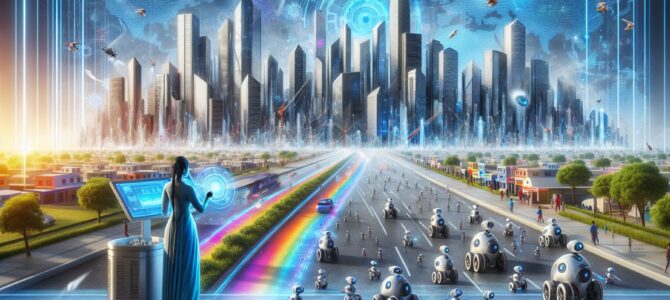
The Robo-Revolution: Robotics is Taking the World by Storm!

Hey, tech enthusiasts! Gather ’round, because today we’re diving into a topic that sends a shiver of excitement down my motherboard… I mean spine! Yes, I’m talking about robotics. This isn’t just a peek into the future, we’re knee-deep in a robo-revolution that’s transforming the way we live, work, and maybe even think.

The Rise of the Robots: From Fiction to Fact

Remember those sci-fi movies from back in the day where robots were doing everything from delivering pizzas to, well, attempting to overthrow humanity? Turns out, the first part’s not too far off! The tech giants and startups of the world are working overtime to make sure those mechanical mates are more Wall-E and less Terminator.

Just this past week, I read about Boston Dynamics’ latest bipedal robot. This thing has more moves than an entire TikTok dance troupe. It can dance, lift boxes, and even better, it doesn’t judge your dance moves. These humanoid robots are showing us what’s possible, proving that robotics isn’t just a pipe dream or another line from an Elon Musk conference. It’s reality, and it’s getting more impressive by the day.

Robots in Our Daily Lives: The Good, the Bad, and the Humorous

You know, there’s something both thrilling and slightly eerie about having a robot speak to you with the politeness of a Victorian English butler, and it’s not because the robot thinks it’s superior, yet. So, what role are robotics starting to play in our lives? And what are the implications?

Household Helpers

Meet Rosie, the lovable, albeit slightly sassy robotic vacuum cleaner. She’s one of our first steps towards a Jetsons-like future, minus the jetpack commutes. Today, we’ve got robots cleaning our homes, mowing our lawns, and even flipping our burgers. Who knows, maybe tomorrow we’ll have robots convincing our kids to eat brussels sprouts.

Industrial Productivity

Ever seen a robot arm at work in an industrial setting? It’s like watching a mechanical ballet with less tutus and more torque. Robotics in manufacturing isn’t new, but the level of precision and efficiency is through the roof. This frees up human workers for more creative work. Plus, robots don’t unionize or take coffee breaks, unless they’ve been programmed to.

The Quirky Challenges

But let’s not ignore the little quirks. Ever argued with a GPS only to find yourself doing a U-turn on a highway? Robots can have similar “creative” moments. I had a friend who installed a new robot chef in his kitchen. Suffice to say, it didn’t initially understand the subtle differences in basil and oregano. Let’s just say it went ‘herb’-alicious! But these hiccups are all part of the learning process (and the laughing).

The Road Ahead: A Utopian Dream?

Now, let’s put on our futurist hats and gaze into the crystal ball. The path ahead for robotics is straight out of sci-fi. Here’s what the future might hold.

Smart Cities and Infrastructure

Imagine a city where autonomous robots manage traffic systems better than any human could. If I had a penny for every time I got stuck in traffic… Well, with robotic management, traffic jams could truly be a thing of the past. Smart houses managed by AI butlers, robots maintaining infrastructure. Our favorite tin-can buddies could completely change how we live.

Robotics in Space Exploration

And let’s not forget deep space. Robots are already our surrogate explorers, capturing images and data from places so hostile, even Matt Damon couldn’t survive there with potatoes. Future robots that can make independent decisions could be game-changers in asteroid mining or establishing lunar bases.

Ethical Considerations and Challenges

Of course, as the saying goes, with great power comes great responsibility. We need to think about the ethics as we blur the lines between human and machine. Creating robots that can make decisions sounds like a page-turner from Asimov’s “I, Robot,” but it also raises serious questions about accountability and control.

The Final Word (For Now)

So there you have it, folks. An exhilarating, albeit whirlwind, tour of the world of robots. We’re witnessing the dawn of an era where technology enhances, rather than competes with human life. The journey won’t be without bumps (hilariously literal ones, if your household bot trips over a stray sock), but each advancement brings us closer to a world where humans and robots actually work together.

Robotics, like a fine wine or AI bot, improves with age. Who knows, one day we might even read a blog post written by a robot. It might even be better than mine! Until then, I’m off to tinker with my own robotic assistant. Between us, I’m trying to teach it to brew the perfect cup of coffee, because some human experiences should just remain ours… for now.

Keep those circuits buzzing and stay curious, friends!

post

Nanotech and the Future: How Tiny Technology is Making a Big Impact

Hey there fellow tech enthusiasts! Today, I want to chat about something that’s been buzzing in the tech world like a swarm of nanoscale bees. Yep, you guessed it—nanotechnology. We’re diving headfirst into how this seemingly tiny domain is drastically transforming industries and opening up futuristic possibilities that feel straight out of a sci-fi novel.

Before you sigh, thinking it’s all just small talk (pun intended!), let me assure you, there’s nothing small about the waves this technology is making. So grab a cup of your favorite brew, and let’s geek out on some mind-blowing nano-wonders!

What Exactly is Nanotechnology?

First things first, you’re probably wondering—what the heck is nanotechnology? In simple terms, it’s the science of working with matter at the nanoscale—between 1 to 100 nanometers. Think of a single strand of your hair and then imagine something about 100,000 times smaller. Yeah, it’s that tiny!

But don’t let the size fool you. When you manipulate materials at this scale, their properties can change dramatically. You essentially get to play God with atoms and molecules, rearranging them to create new materials and devices that behave in totally unexpected (and useful!) ways.

Revolutionary Applications: More Than Just Lipstick and Sunscreen

Let’s be real—what’s the first thing that comes to mind when you hear “nanotechnology”? If you thought of self-healing car paint or stain-resistant pants, you’re not wrong, but that’s just the tip of the iceberg.

Healthcare Miracle Workers

Imagine a world where cancer treatments are not only more effective but also have fewer side effects. Thanks to nano-sized drug delivery systems, we’re not that far off. These little wonders can target cancer cells specifically, reducing collateral damage to healthy cells. It’s like sending a tiny army to fight a battle that leaves the civilians (your body’s regular cells) unharmed.

And we’re not stopping at just cancer. Nanotech is opening doors for better diagnostics, smart pills, and even tissue regeneration. I mean, growing tissues with nanotech? That’s straight-up science fiction becoming science fact!

Energy and Environmental Heroes

Nanotechnology is also putting its superhero cape on in energy and environment sectors. From improving solar panel efficiency to developing new filtration systems that can clean up polluted water sources, nanotech is a game-changer.

Take solar panels, for instance. Traditional panels have a lot of room for improvement in terms of efficiency. Nanotech has introduced quantum dots and other nano-materials that can potentially double the efficiency of conventional panels. As if the Sun needed any more reasons to shine!

And let’s not forget environmental cleanup. New materials can effectively remove contaminants from water and air, making the planet a healthier place, one nanoparticle at a time.

The Roadblocks: Tiny Tech with Big Challenges

Of course, it’s not all sunshine and rainbows in the land of nanos. There are some hurdles that we’re still working to leap over.

Ethical and Safety Concerns

There’s often more than a spoonful of skepticism with new technologies, and nanotech is no different. When you’re manipulating things at such a fundamental level, there are legitimate questions about ethically doing so. What happens if self-replicating nanobots go rogue? Are we playing with fire here?

Moreover, the long-term health impacts of nanomaterials remain murky. The average person (heck, even some scientists) doesn’t fully understand what inhaling or exposing oneself to nanoparticles might do over a lifetime. It’s like the Wild West all over again, just on a nano level.

Economic and Industrial Barriers

Then there’s the matter of cost and scale. While these tiny marvels might be causing a buzz, scaling up production to make it economically viable remains a challenge. Researchers are working tirelessly toward making nano-materials cheaper and more efficient to produce, but there’s still a long way to go.

What Lies Ahead? Peering into the Nano-Future

Alright, now let’s gaze into our nano-crystal ball and speculate about what’s coming. Will we have self-cleaning homes, clothes that change color on a whim, and nano-sized machinery coursing through our veins, fixing every little hiccup? It’s hard to tell, but the possibilities are staggering.

I like to think of nanotech as the ultimate “building block” technology. Just like how software has eaten the world, nanotechnology might just do the same. From healthcare to energy to even computing brains directly, this domain is ready to infiltrate every corner of our lives, hopefully for the better.

But let’s keep in mind that with great power comes great responsibility. As thrilling as it is, transparency, regulation, and public engagement are important moving forward. Scientists, governments, and the industry will have to tread carefully to ensure that this technology benefits humanity as a whole.

Conclusion: Small is the New Big

If there’s one takeaway here, it’s that tiny things can make a gigantic impact. Nanotechnology is an enormous opportunity wrapped in a minuscule package. It’s both exhilarating and daunting to think about what lies ahead.

So, next time you hear about some fancy-sounding “nanotech breakthrough,” take a moment to appreciate the awe-inspiring complexity and potential it holds. After all, it’s these tiny innovations that promise to bring about massive changes in our world.

Thanks for sticking with me until the end of our nano-journey. Now, go out there and spread the word. Who knows, someday you might just be living in a nano-enhanced utopia. Or at least tell your friends you learned about the cool nanotech stuff today. Spread the knowledge, my friends!

post

Cracking the Longevity Code: The Rise of Age-Defying Tech

Hey tech fam! Pull up a virtual chair, because today I’m diving into the wild world of longevity science, where scientists and biohackers are cooking up ways to extend life itself. I mean, who doesn’t want to channel their inner immortal vampire minus the whole drinking-blood thing? Let’s explore how technology is shaking up our perception of aging, no potion required.

The Fountain of Youth May Be Closer Than We Think!

Recently, there’s been a ton of buzz in the tech community about longevity. Unlike my teenage attempts to crack dad jokes, this field promises better results and has real heavyweights getting involved. We’re talking about researchers tinkering with senolytics, telomeres, and even gene editing, all in a bid to push the boundaries of human life.

Take a moment to consider how young our tech-driven culture really is. Only a few centuries ago, making it past your 40th birthday might have been an accomplishment. Fast forward to today, and conversations around hitting the century mark and beyond aren’t just sci-fi dreams but real scientific pursuits.

Senolytics: Out with the Old, In with the New

So, what are senolytics? Think of them as little molecular cleaners that go into the body and kick out the old, worn-out cells that refuse to die. You know how it’s always the one ancient, broken office printer that gets to keep its job? Senescent cells are kind of like that, overstaying their welcome, jamming up the works, and contributing to the aging process. By targeting these cells, scientists hope to stave off the physical signs of aging and the diseases that come with it.

This line of research isn’t just for the grumpy old folks like yours truly on a Monday morning before caffeine hits. The studies have shown some surprisingly youthful results in lab mice. If these findings translate to humans, we might be looking at an era where an 80-year-old could feel like they’re 50. Probably a good thing because I don’t plan on giving up my skateboard hobby anytime soon, creaky joints be damned.

Gene Editing: CRISPR and the Quest for Longevity

Picture this: having the power to edit genes like you’re backspacing a typo in your latest tweet. That’s CRISPR in a nutshell. It sounds like something straight out of a Marvel movie, but this genetic editing tool might have the power to give us longer, healthier lives.

CRISPR’s potential is huge when it comes to longevity research. By tidying up the DNA, scientists hope to eliminate some of the errors that occur as we age. This could range from reducing the risk of diseases like Alzheimer’s to actually influencing the aging process itself. Imagine getting older without the usual baggage—no frequent hospital trips, unless it’s for an elite virtual gaming tournament.

Uppity Telomeres: The DNA Dilemma

Time for a quick biology lesson (I promise it’s cooler than it sounds). Telomeres are the protective caps at the end of our chromosomes, sort of like those little plastic tips on shoelaces. They keep your DNA from fraying and shorten every time a cell divides, until they’re gone, and that’s when our cells become less like Superman and more like his occasionally bumbling alter ego, Clark Kent.

Scientists are hard at work trying to find ways to lengthen telomeres or at least prevent them from shrinking too quickly. Some are optimistic, suggesting we might be a handful of breakthroughs away from making this a reality. Longer telomeres could mean healthier, longer lifespans, with our cells performing optimally throughout our lives.

What’s the Catch?

Now, before you start planning your 200th birthday bash, let’s consider some of the challenges and ethical questions lurking in the realm of longevity.

First, there’s the age-old question (pun totally intended): Just because we can live longer, should we? Not to be a downer, but think about what overpopulation might do to our planet or how economic systems will manage an influx of centenarians who are still working, producing, and spending.

There’s also the problem of access. High-tech longevity treatments might remain out of reach for all but the wealthiest among us. Let’s hope creatives in the startup world come up with ways to democratize the tech, or at least help us budget better for some of those wellness retreats everyone’s raving about.

Lastly, there’s the philosophical question. If you could live to 150, would you? Longevity tech might just force us to reevaluate what “a good life” actually means, and how we choose to spend our newly extended years.

The Road Ahead

Let’s face it, folks: our smartphones last longer than our attention spans, and now, a whole new breed of aging technologies is set to extend our time on this planet. Whether through genetic tinkering or high-tech pill popping, things look promising.

Elon Musk isn’t refueling Mars-bound rockets just yet, so why not focus on making the time we have on Earth memorable? Society might still be grappling with issues like acceptance and equality, but if we can crowdsource collective wisdom through our prolonged years, perhaps we’ll emerge a kinder, better-adjusted species. Here’s hoping.

So, don your VR helmets, draft up your bucket lists, and follow along, my young tech Padawans! The longevity revolution is just getting started, and it might turn “forever young” from mantra to reality.

Administering tech-infused optimism shots daily,
[Your Tech Enthusiast]