The Numbers Tell a Story About Who Gets to Run
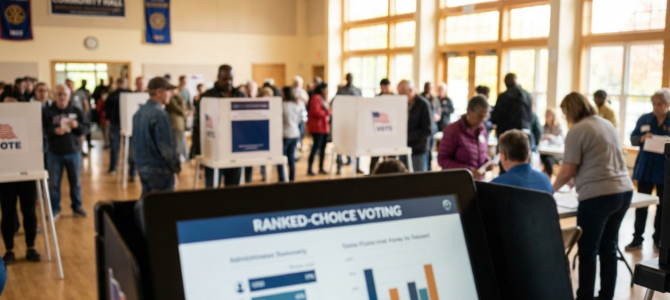
We are living through a genuine electoral transformation, and the data from 2024 and early 2025 proves it. By January of this year, ranked-choice voting had expanded to cover over 13 million eligible voters across 17 states and Washington D.C. That’s a 60 percent increase from just 2022, when the system covered 8 million voters. This isn’t incremental change. This is a shift happening at the ballot box in real time, and it matters because the voting method we choose determines not just how winners are selected, but who decides to run in the first place.
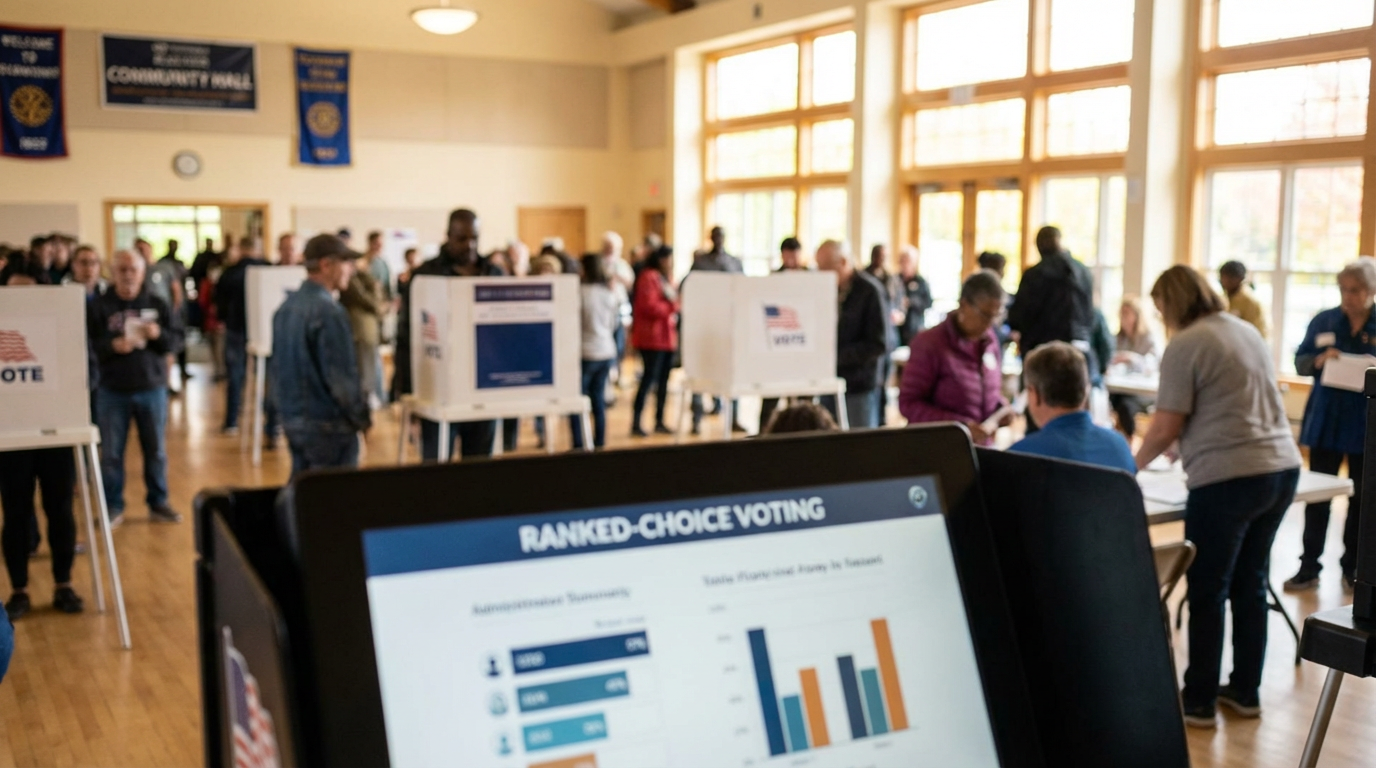
I’ve spent enough years watching local elections to know that democratic vitality doesn’t begin on election day. It begins months earlier, when candidates are deciding whether they have a realistic path to victory. Change the rules about how voters rank their choices, and you change the calculation people make when they’re deciding to put their name on the ballot. That’s not theory. That’s what we’re watching happen in districts and states across the country right now.

Alaska’s Experiment Produced Tangible Results
Alaska offers us the clearest before-and-after comparison available. When the state implemented ranked-choice voting for its 2024 congressional elections, something measurable shifted. The number of first-time candidates from outside the Democratic and Republican parties who qualified for the general election ballot increased by 6.2 percentage points compared to the 2020 cycle, which ran under the traditional plurality system. That percentage point difference might sound modest until you think about what it represents. It means more people looked at the political landscape and believed they had a genuine chance. More voices entered races that had previously been closed to them.
This is the precinct-level evidence that ranked-choice voting functions as promised: it loosens the stranglehold that the two-party duopoly maintains over ballot access. When voters can rank their first, second, and third choices, they’re no longer forced into the scarcity mindset of traditional voting. A candidate running on an independent platform or representing a third party isn’t automatically treated as a spoiler. They become a legitimate option. And that changes behavior upstream, before anyone even votes.
Women and Underrepresented Candidates See Real Gains
Research from MIT’s Election Data and Science Lab, released in 2025, quantified something that organizers had suspected for years. In jurisdictions using ranked-choice voting, women candidates advanced past primary stages at a 19 percent higher rate compared to places still using traditional plurality voting systems. Pay attention to that finding, because it points to a real mechanism. When voters aren’t forced to make a zero-sum choice between candidates, they’re more likely to support candidates who aren’t part of the political establishment’s expected roster. Women and people from underrepresented communities often face steeper barriers to being seen as “viable,” and ranked-choice voting appears to reduce some of those barriers.
The MIT Election Data and Science Lab: Ranked Choice Voting Research has been tracking these patterns across multiple election cycles. What matters about their work is that it’s precise and replicable. These researchers aren’t advocates trying to sell you on an idea. They’re collecting data on what actually happens when the voting method changes. And the pattern they’re documenting is consistent: ranked-choice voting correlates with more diverse candidate pools and higher success rates for candidates outside traditional power structures.
Nevada’s Expansion Represents the Largest Single-State Jump Yet
In November 2024, Nevada voters approved Ballot Question 3, establishing ranked-choice voting for statewide elections. This single decision represented the largest expansion of ranked-choice voting in U.S. history by eligible voter count. We’re talking about a state with millions of registered voters, not a pilot program in a mid-sized city. Voters in a competitive, diverse state looked at the available evidence and decided this method made sense for their future.
What happens next will matter for the entire country. Nevada’s implementation will give us a test case on how ranked-choice voting scales to a statewide level in a state with real partisan competition. We’ll be able to watch whether the patterns we’ve seen in smaller jurisdictions hold up in a higher-stakes environment. We’ll see whether more candidates feel emboldened to run. We’ll track whether the candidate field looks different than it would have under the old system.
Portland’s Multi-Member District Innovation Shows Another Path Forward
Not all ranked-choice voting implementations look identical. In November 2024, Portland, Oregon implemented a novel version: a multi-member district system with ranked-choice voting for city council elections. Twelve council members now serve from four geographic districts, a structural change paired with the voting method change. It’s a more ambitious redesign than most other implementations, combining proportional representation principles with ranked-choice voting mechanics. This approach potentially gives voters more power to elect candidates who represent the full ideological and demographic spectrum of their community.
These variations matter because they show that there isn’t one single “ranked-choice voting” system. There are different configurations, different ways of combining this voting method with other structural reforms. Some jurisdictions have adopted it for primary elections. Others use it for general elections. Some pair it with single-member districts. Others, like Portland, are experimenting with multi-member districts. That diversity of implementation is actually useful, because it lets us compare outcomes across different models and see which configurations produce which results.
What the Data Actually Shows About Candidate Behavior
If you want to understand why this matters beyond the abstract, think about the candidate’s decision point. Someone considering a run for office is asking themselves whether they can win under the existing rules. In a traditional plurality system, that calculation is stark: can I get more votes than everyone else? In a ranked-choice system, the calculation shifts. Can I build a coalition? Can I be someone’s second or third choice? Can I appeal to a subset of voters and still advance? These are different questions, and they open the field to different kinds of candidates.
The FairVote RCV Election Results Database has been documenting these outcomes election by election, precinct by precinct. It’s a resource that lets you dig into the specific numbers from your own region if you have a locality that’s implemented ranked-choice voting. If you’re genuinely curious about whether the system works differently than the alternatives, that’s where you go to check.
We’ve now accumulated enough data to say this with confidence: ranked-choice voting demonstrably changes the candidate pool that emerges. It’s not a silver bullet for every problem in American politics, but it is a lever that, when pulled, produces measurable shifts in who feels empowered to run. Democracy functions better when more people believe they have a genuine chance to participate. The evidence is there if you’re willing to look at it.